

work
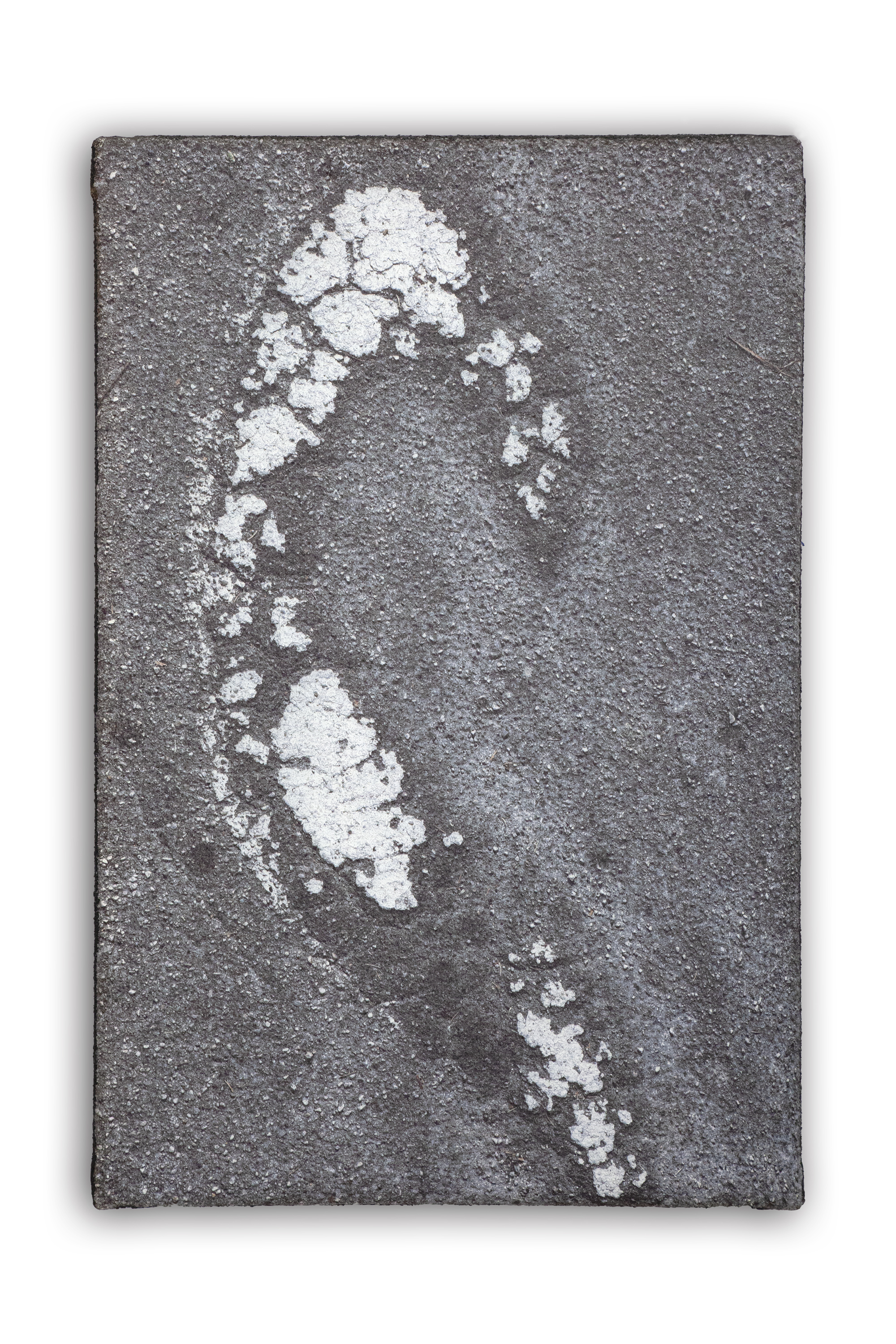
DeltaPoRoad 1 – Teoria e Pratica della Percezione – Foto-Scultura da vedere e da toccare


| category | Photography |
| subject | Abstract |
| tags | naturale-artificiale, foto-scultura, identità del territorio, post-fotografia, materia urbana, materiali industriali, carta catramata , multisensory work, arte multisensoriale, fotografia, percezione, tracce, asfalto, vetro-asfalto |
| base | 50 cm |
| height | 75 cm |
| depth | 4 cm |
| year | 2012 |
All perceptions are mental reconstructions, but knowledge is not a mirror of reality.
I am fortunate to live in the Veneto Regional Park of the Po Delta, a land painstakingly reclaimed from the sea, where nature and human intervention intertwine in a delicate balance. Centuries of land reclamation, embankments, and pumping stations have shaped the landscape, making it cultivable, habitable, and a destination for those seeking nature, authenticity, and experience.
Today, with its 70,000 inhabitants and over 2,000 km of paved roads, the Park is a lived-in, traversed, and transformed territory. Yet, in images shared online, these roads seem to vanish, as if an untouched landscape were more acceptable, more desirable.
This omission is not accidental; it reflects a mental mechanism that tends to exclude asphalt from the imagery of a natural environment. Yet, the Po Delta itself is a human creation. The Taglio di Porto Viro, in 1604, diverted the river’s course, altering its morphology; massive embankments regulate its waters, tireless pumping stations keep it habitable.
Can we truly trust our perception? Is the Po Delta natural or artificial? Is asphalt an intrusion or a necessity? Selection, exclusion, filtering reality to construct a vision are among the most insidious mechanisms of human thought.
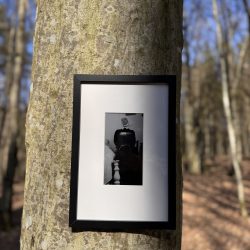
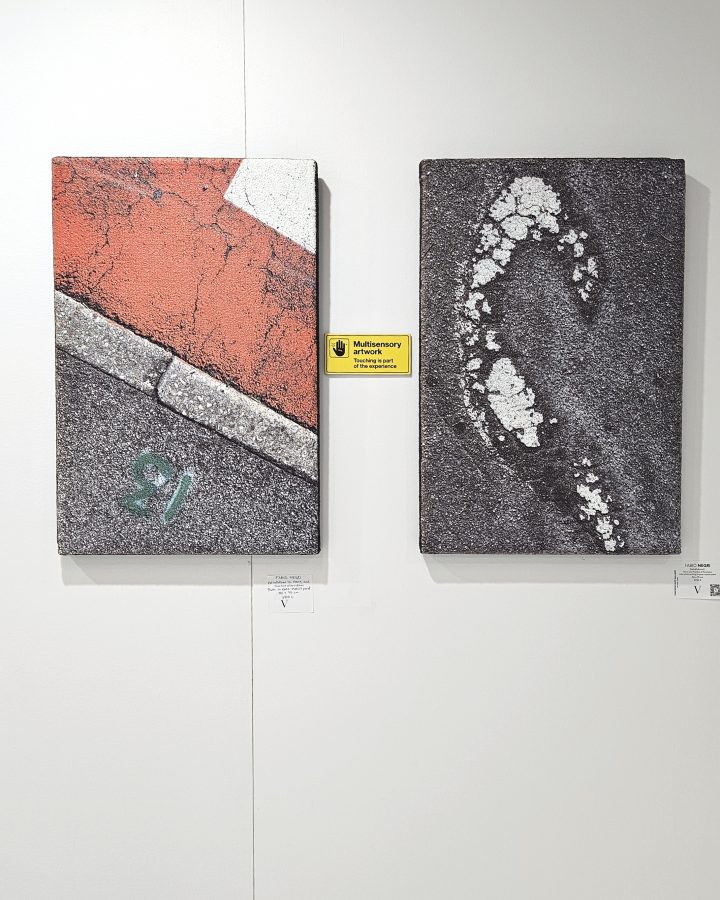
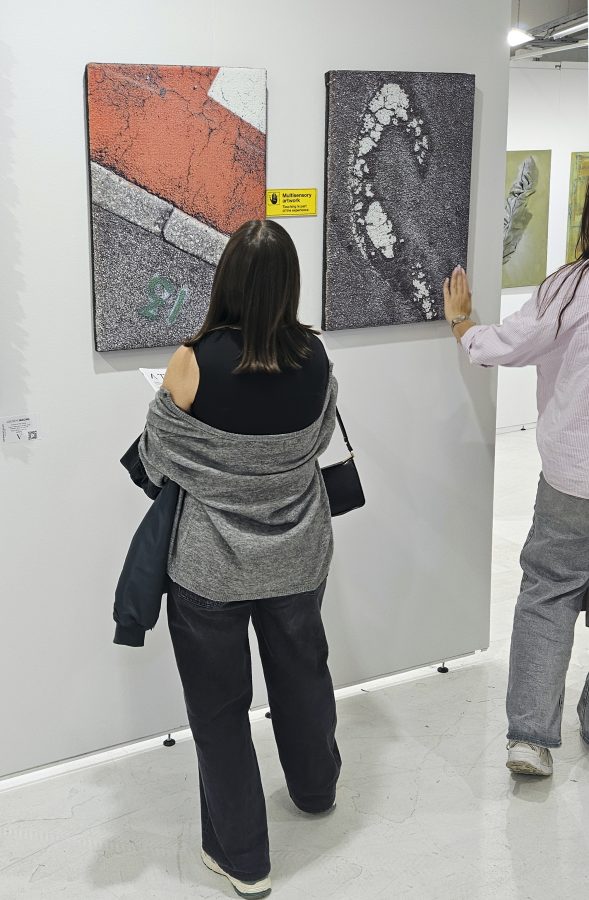
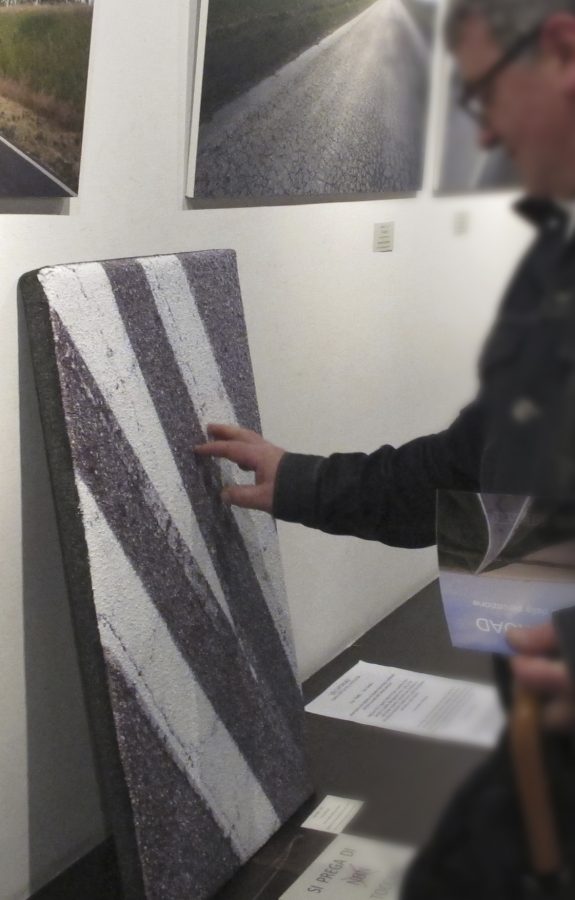
DeltaPoRoad does not provide answers, but invites observers to challenge their certainties. Through these photo-sculptures, meant to be seen and touched, it opens a dialogue on the ambiguous nature of perception and the fragility of our interpretation of the world.
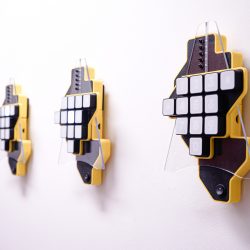
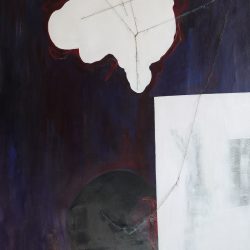
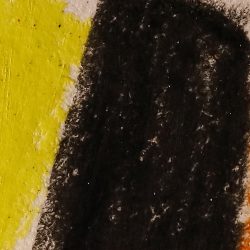
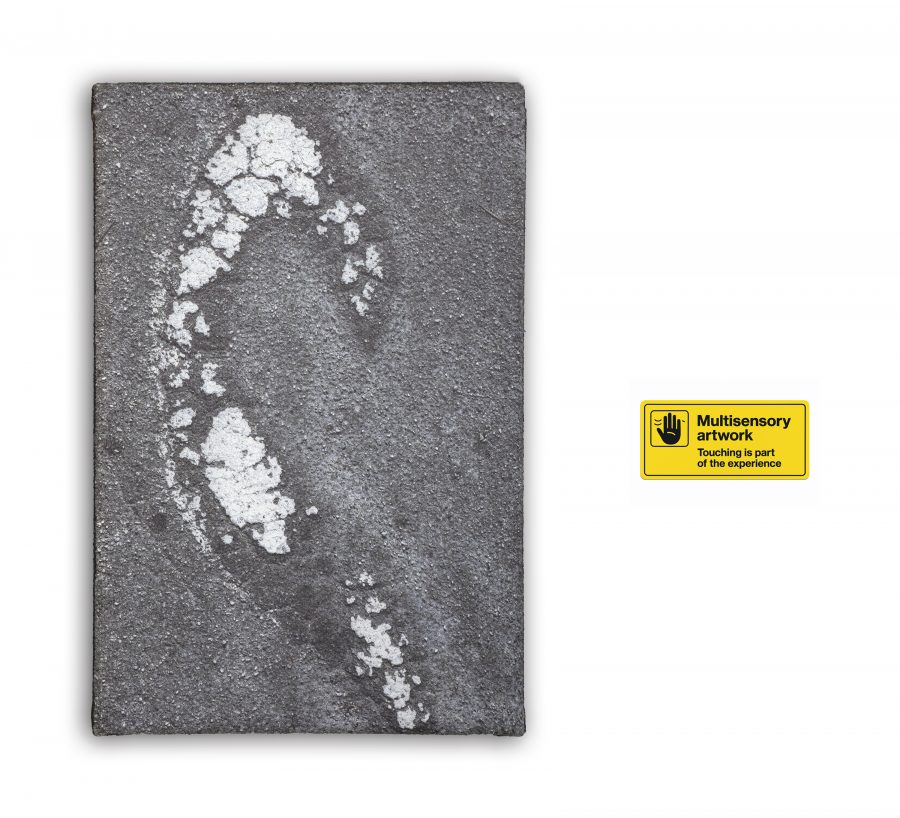
Printed on bituminous support, these photographic works are not merely meant to be observed; they invite the public to touch them, to perceive their materiality, refining the experience of awareness through the sense of touch. Due to their composition and uniqueness, these works can be considered true sculptures to be hung.
Technique: Inkjet photo printing on glass-asphalt panel. - Print run 1/1
I am fortunate to live in the Veneto Regional Park of the Po Delta, a land painstakingly reclaimed from the sea, where nature and human intervention intertwine in a delicate balance. Centuries of land reclamation, embankments, and pumping stations have shaped the landscape, making it cultivable, habitable, and a destination for those seeking nature, authenticity, and experience.
Today, with its 70,000 inhabitants and over 2,000 km of paved roads, the Park is a lived-in, traversed, and transformed territory. Yet, in images shared online, these roads seem to vanish, as if an untouched landscape were more acceptable, more desirable.
This omission is not accidental; it reflects a mental mechanism that tends to exclude asphalt from the imagery of a natural environment. Yet, the Po Delta itself is a human creation. The Taglio di Porto Viro, in 1604, diverted the river’s course, altering its morphology; massive embankments regulate its waters, tireless pumping stations keep it habitable.
Can we truly trust our perception? Is the Po Delta natural or artificial? Is asphalt an intrusion or a necessity? Selection, exclusion, filtering reality to construct a vision are among the most insidious mechanisms of human thought.
DeltaPoRoad does not provide answers, but invites observers to challenge their certainties. Through these photo-sculptures, meant to be seen and touched, it opens a dialogue on the ambiguous nature of perception and the fragility of our interpretation of the world.
Printed on bituminous support, these photographic works are not merely meant to be observed; they invite the public to touch them, to perceive their materiality, refining the experience of awareness through the sense of touch. Due to their composition and uniqueness, these works can be considered true sculptures to be hung.
Technique: Inkjet photo printing on glass-asphalt panel. - Print run 1/1