

work
Strutture Latenti
| category | Sculpture |
| subject | Human figure, Animal |
| tags | corpo, interiorità, ibrido |
| base | 30 cm |
| height | 36 cm |
| depth | 43 cm |
| year | 2026 |
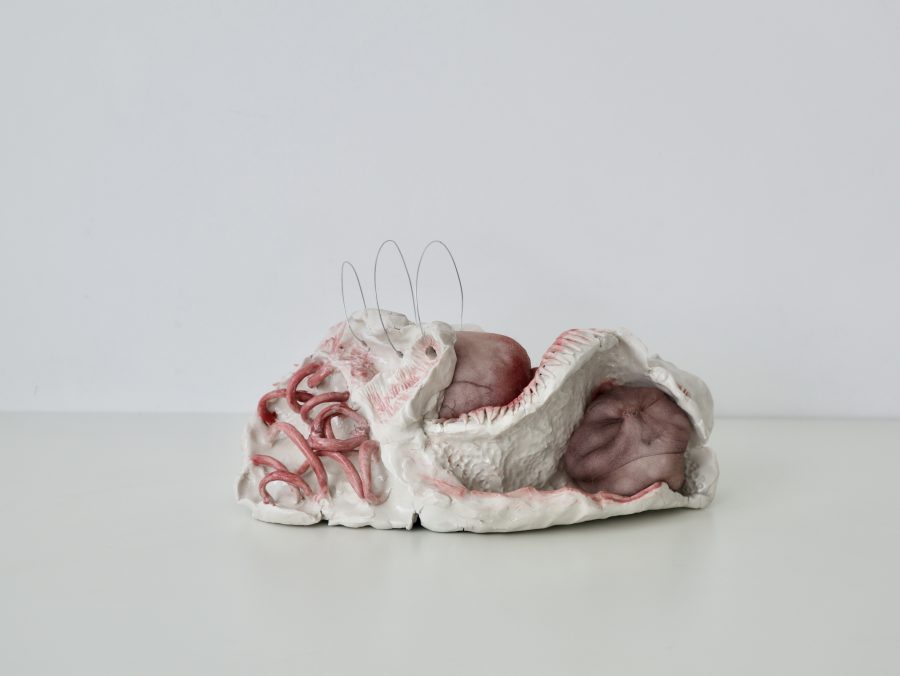
Strutture Latenti 1, 2 e 3
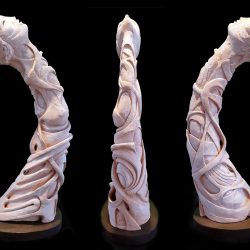
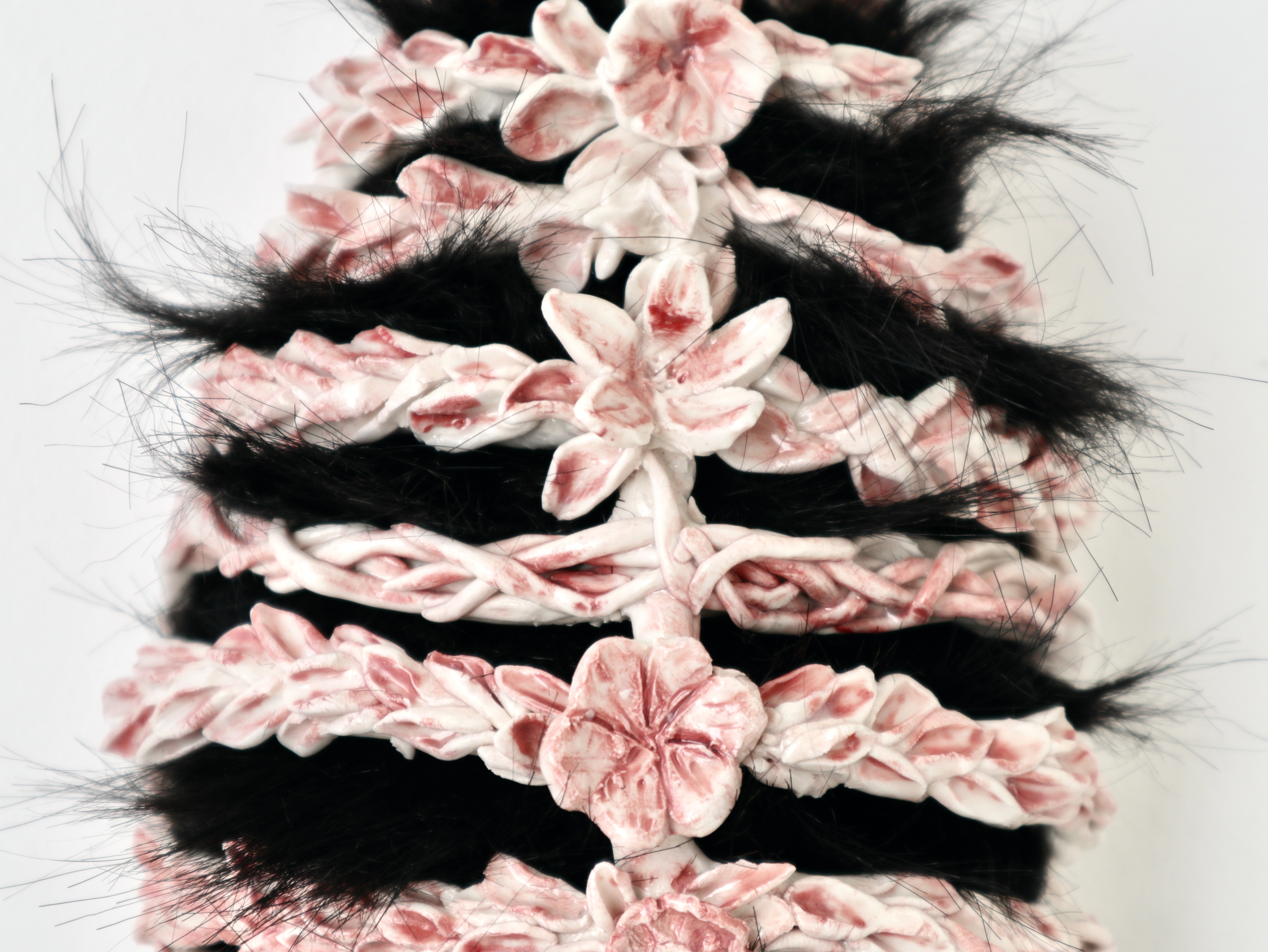
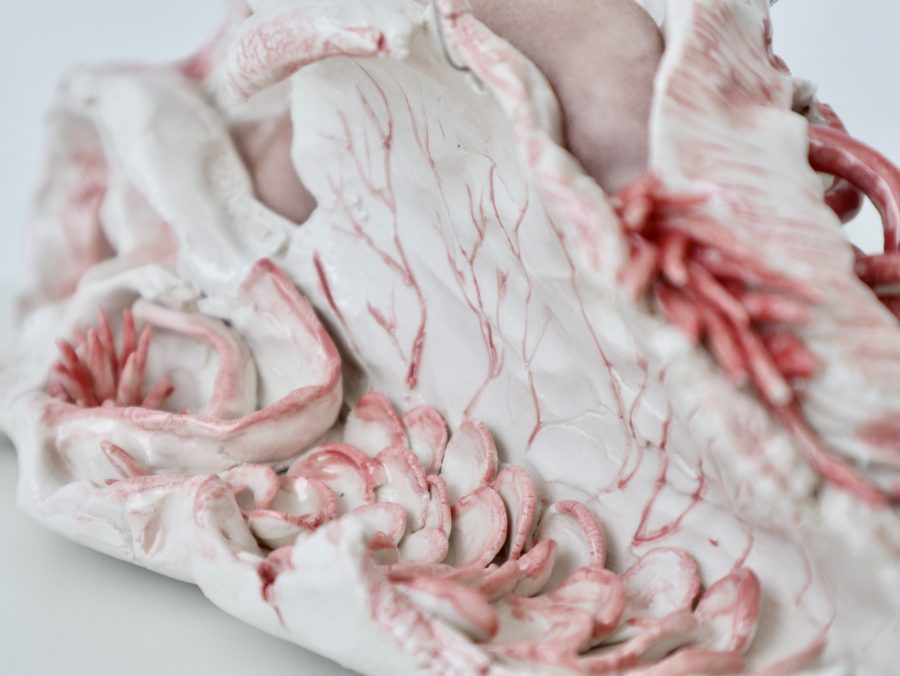
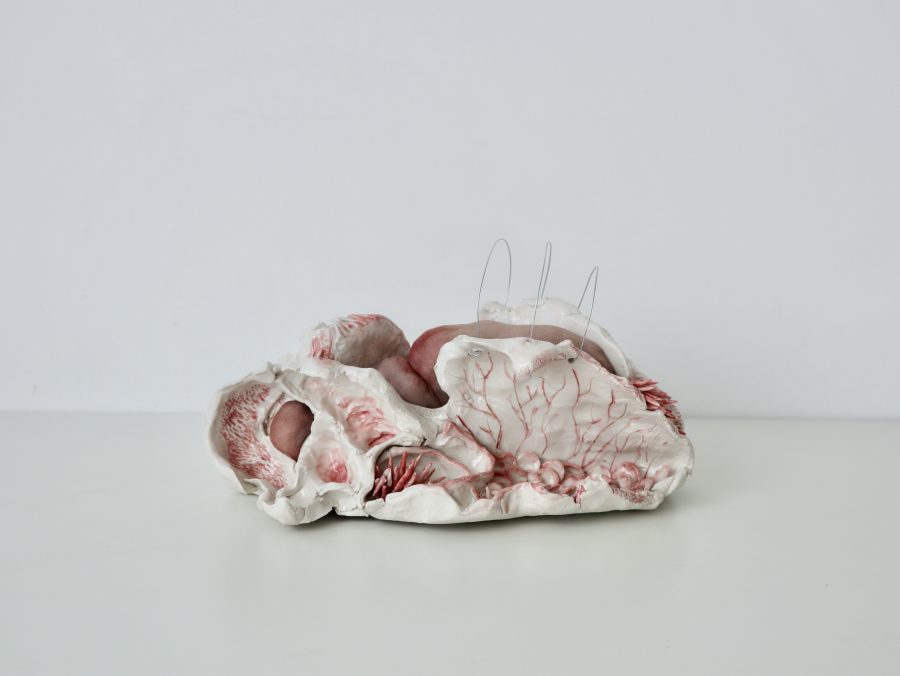
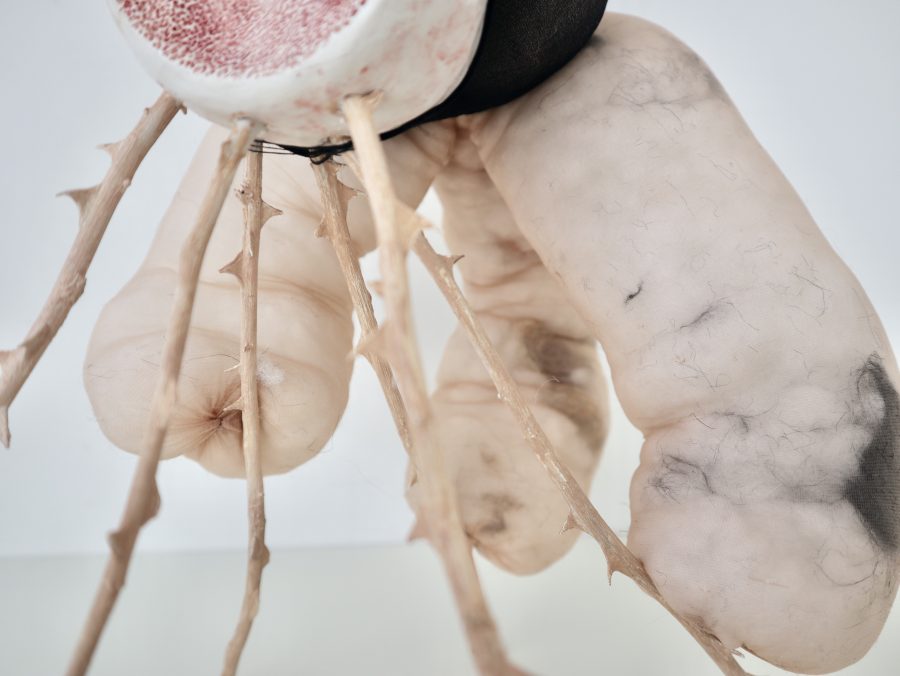
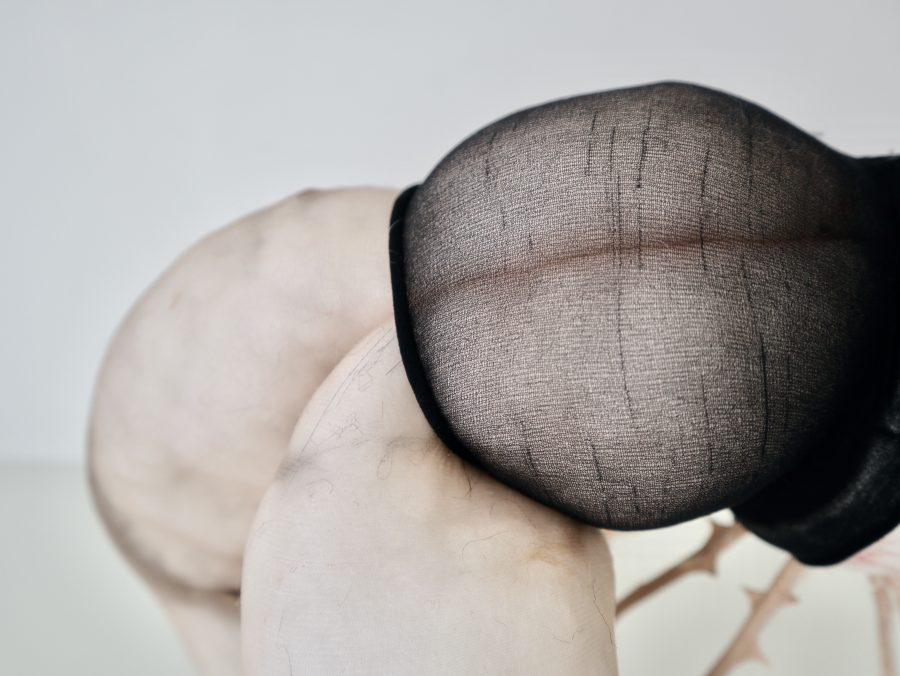
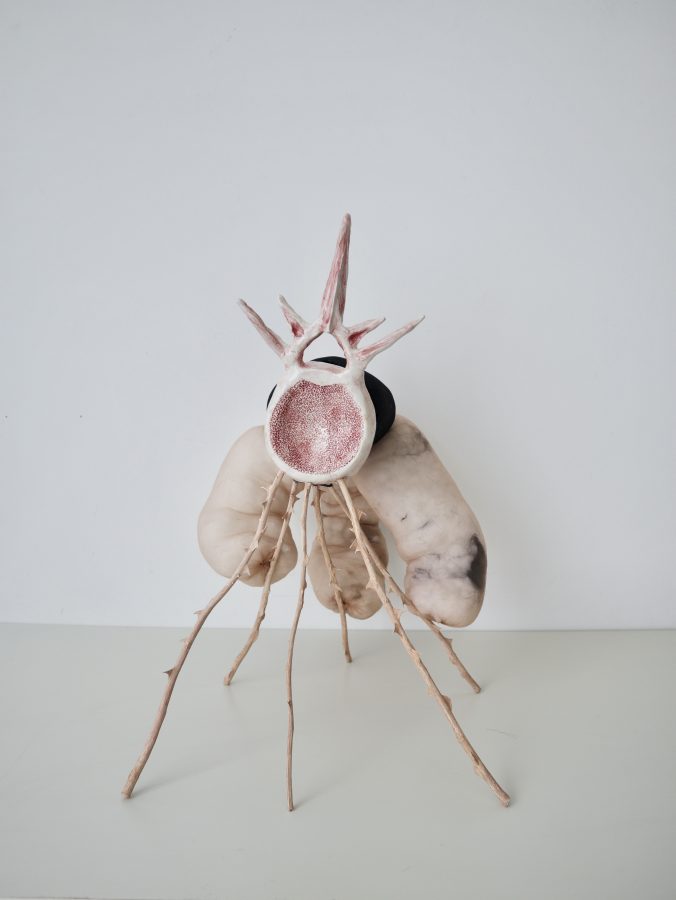
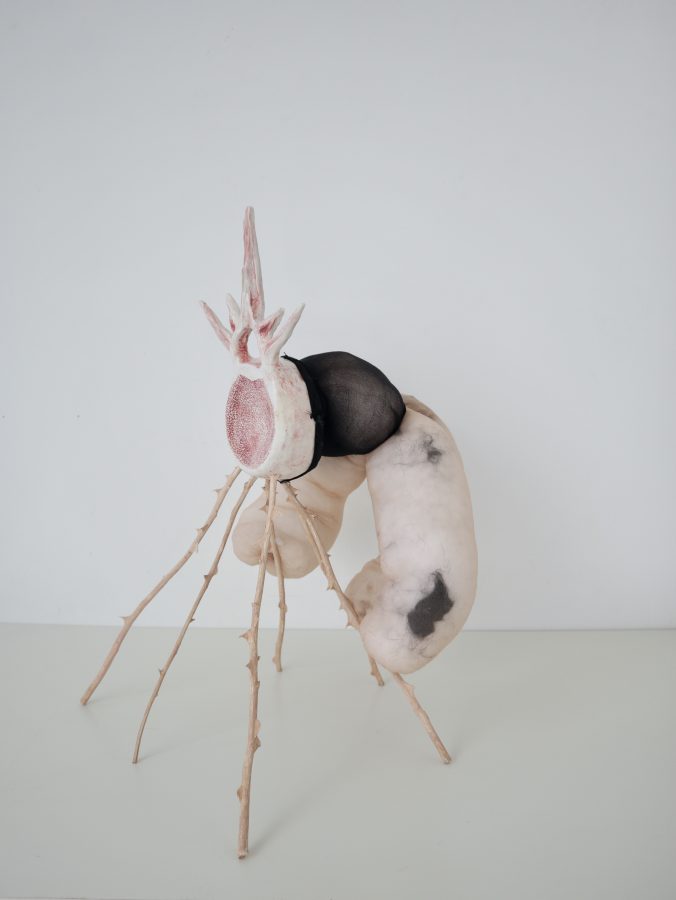
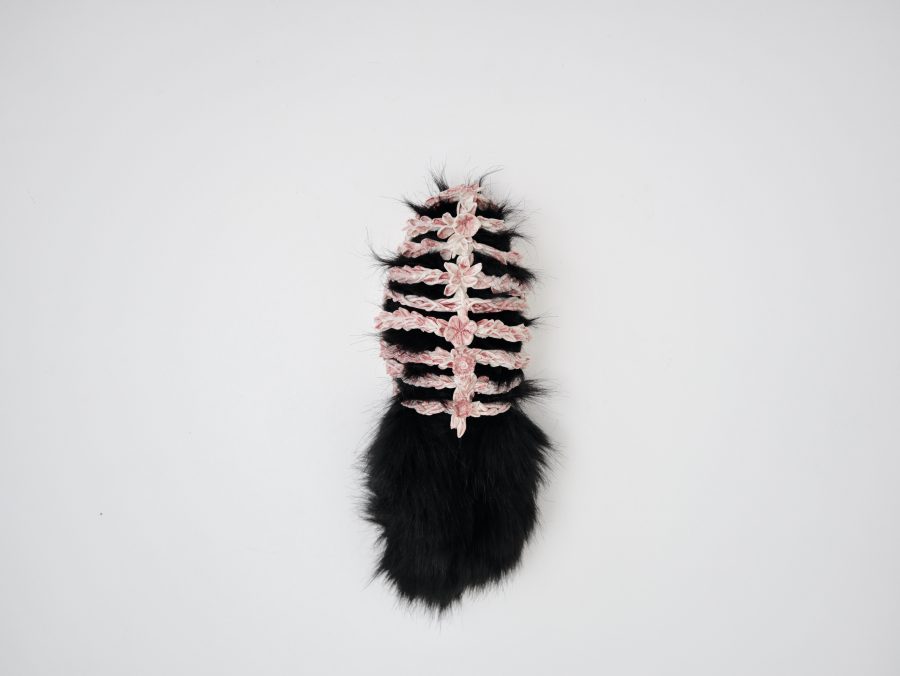
Porcelain, slip, ceramic glaze, polyester, nylon, fur, rose branches, wine, makeup, wire, synthetic fur
Size from 14x26x14 cm to 43x30x36 cm
Year 2025-2026
These sculptures are formed from subtracted anatomy.
They do not depict the body, but retain its resonance.
The chest, pelvis, and spine are merely starting points—matrices that are traversed, deformed, and transformed into something else entirely. Porcelain, simultaneously fragile and resistant, becomes bone that has lost its original function and acquired another: no longer to support, but to reveal.
Each structure seems to emerge from internal pressure, as if something long held in latency has found a fissure through which to surface. This is not a violent act, but a slow insistence.
The surfaces retain traces of fur, thorns, iron, wine, and make-up. Elements that speak of attraction and defence, care and injury, desire and control. Nothing is illustrative. Everything is allusive.
These forms do not depict shadows; they embody them.
They do not denounce the abyss; they render it inhabitable.
They are the structures of an interior we do not fully understand: fossils of a possible future, architectures of what remains suspended within us, waiting to be recognised.
Porcelain, slip, ceramic glaze, polyester, nylon, fur, rose branches, wine, makeup, wire, synthetic fur
Size from 14x26x14 cm to 43x30x36 cm
Year 2025-2026
These sculptures are formed from subtracted anatomy.
They do not depict the body, but retain its resonance.
The chest, pelvis, and spine are merely starting points—matrices that are traversed, deformed, and transformed into something else entirely. Porcelain, simultaneously fragile and resistant, becomes bone that has lost its original function and acquired another: no longer to support, but to reveal.
Each structure seems to emerge from internal pressure, as if something long held in latency has found a fissure through which to surface. This is not a violent act, but a slow insistence.
The surfaces retain traces of fur, thorns, iron, wine, and make-up. Elements that speak of attraction and defence, care and injury, desire and control. Nothing is illustrative. Everything is allusive.
These forms do not depict shadows; they embody them.
They do not denounce the abyss; they render it inhabitable.
They are the structures of an interior we do not fully understand: fossils of a possible future, architectures of what remains suspended within us, waiting to be recognised.