

work
Viaggio del tempo
| category | Painting |
| subject | Nature, Abstract |
| tags | vita, metallo, polvere, viaggio, memoria |
| base | 100 cm |
| height | 40 cm |
| depth | 0 cm |
| year | 2005 |
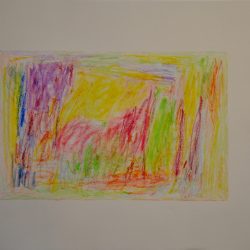
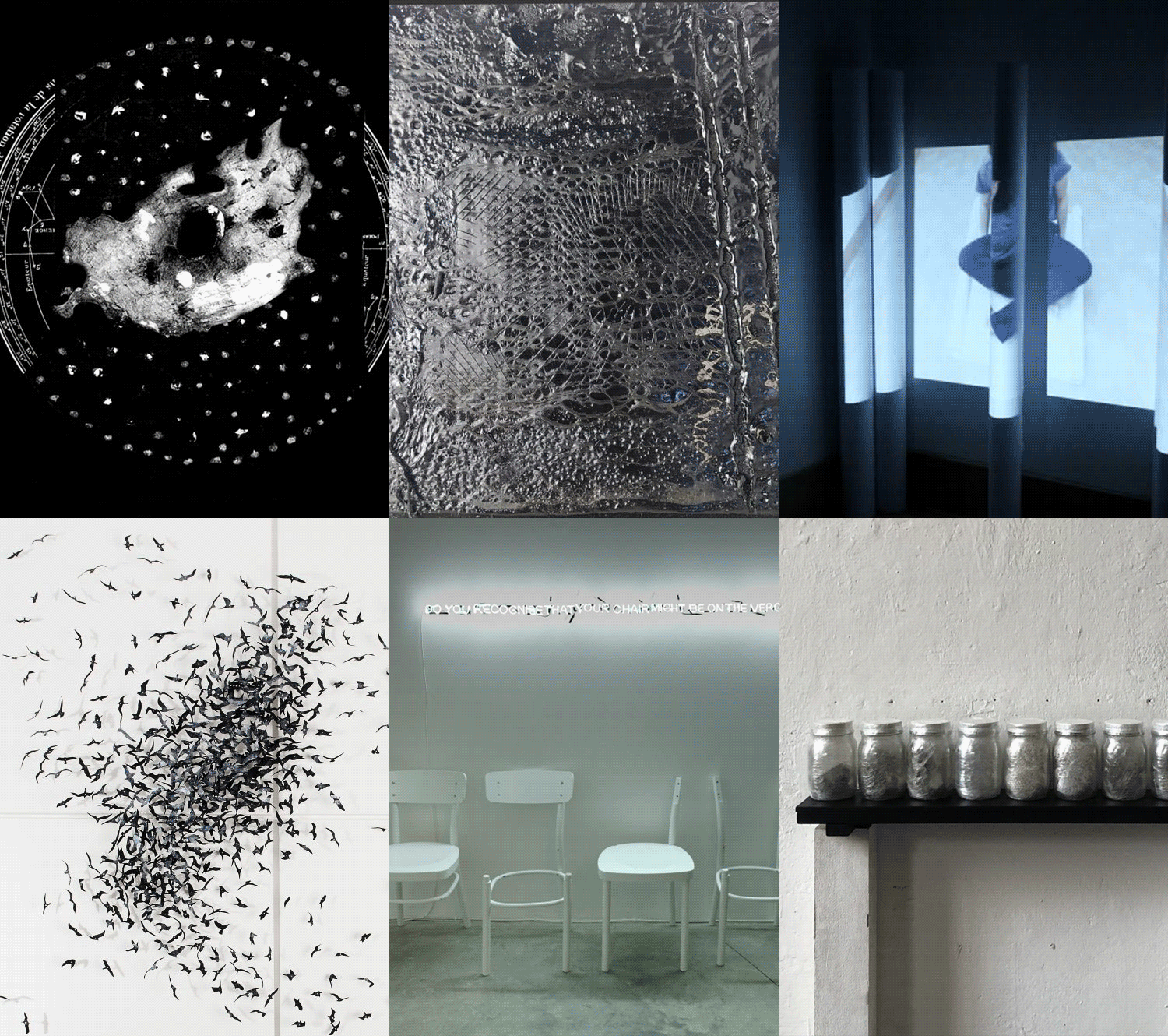
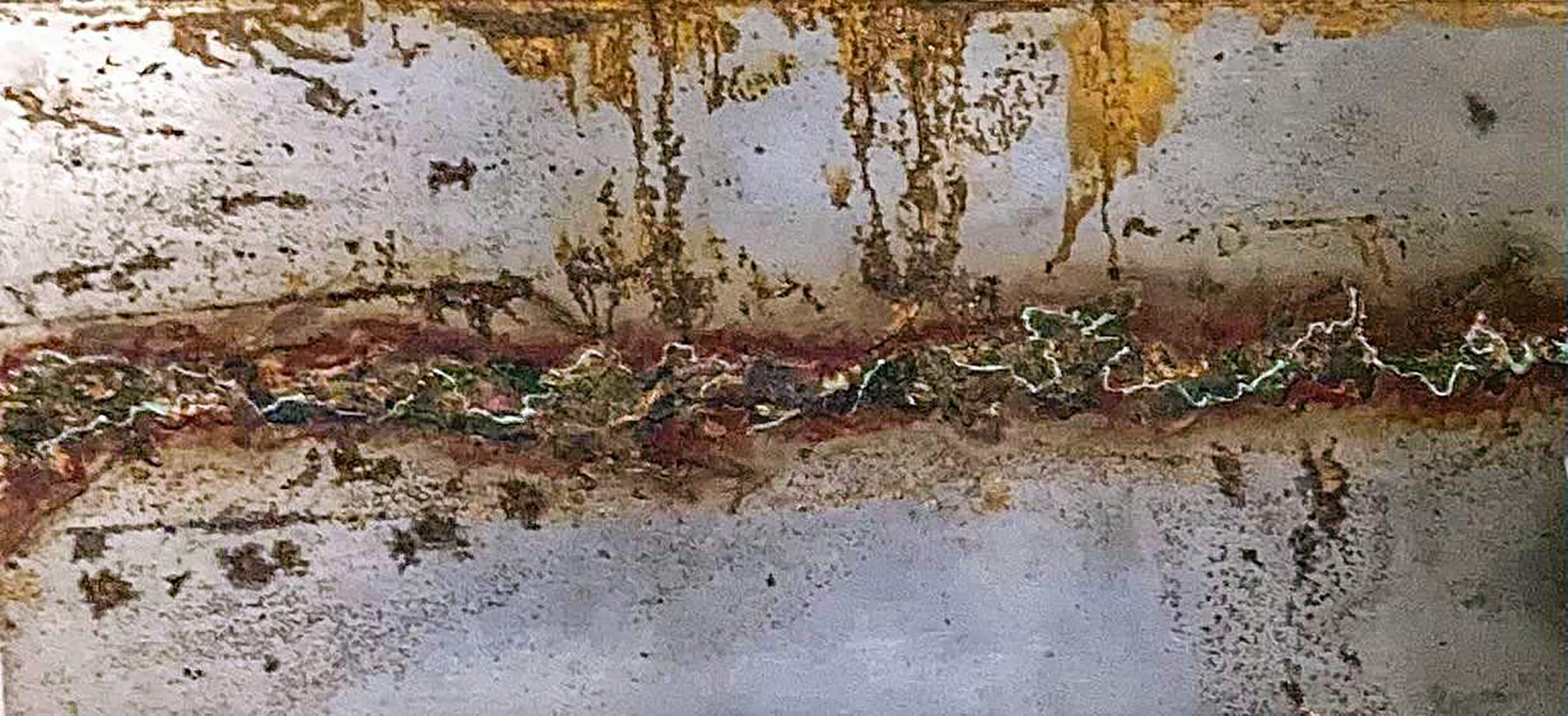
This work on a metal plate, created using a mixed media—metal powder, acrylic, unconventional engravings, and oxidation processes—presents a surface traversed by time. The material seems to transform before our eyes: oxidations drip and layer like traces of rain or rust, while the central engraved line runs through the composition like a wound or a stitch, suggesting the idea of a closure, a seal.
The material texture is the protagonist. Brown, reddish, and golden tones emerge from the pale surface, creating an almost archaeological landscape, where every mark seems deposited by the passage of time. The metallic powders and oxidations generate a balance between control and randomness, as if the material itself participated in the creative process.
At the center, that continuous, irregular line symbolically evokes a metal envelope: a sealed container that holds memories, experiences, and traces of travel. It is not an envelope in the traditional sense, but a visual metaphor: a place where time bends and memory settles. The reflective surface of the metal thus becomes an implicit mirror, inviting the viewer to recognize something of themselves.
The theme of travel is manifested in the vertical drips and corroded marks, reminiscent of maps, routes, or worn landscapes. Time appears as a transformative agent: it oxidizes, modifies, and leaves scars. Memory, on the other hand, is what remains trapped in the material, preserved within this symbolic "envelope."
The work thus occupies a space between painting and sculpture, between surface and depth. It is an object that does not tell a linear story, but preserves traces: a sensitive archive where travel, time, and memory intertwine and where the metal becomes a poetic mirror of our inner selves.
The material texture is the protagonist. Brown, reddish, and golden tones emerge from the pale surface, creating an almost archaeological landscape, where every mark seems deposited by the passage of time. The metallic powders and oxidations generate a balance between control and randomness, as if the material itself participated in the creative process.
At the center, that continuous, irregular line symbolically evokes a metal envelope: a sealed container that holds memories, experiences, and traces of travel. It is not an envelope in the traditional sense, but a visual metaphor: a place where time bends and memory settles. The reflective surface of the metal thus becomes an implicit mirror, inviting the viewer to recognize something of themselves.
The theme of travel is manifested in the vertical drips and corroded marks, reminiscent of maps, routes, or worn landscapes. Time appears as a transformative agent: it oxidizes, modifies, and leaves scars. Memory, on the other hand, is what remains trapped in the material, preserved within this symbolic "envelope."
The work thus occupies a space between painting and sculpture, between surface and depth. It is an object that does not tell a linear story, but preserves traces: a sensitive archive where travel, time, and memory intertwine and where the metal becomes a poetic mirror of our inner selves.