

work
Liturgia della macchina velata
| category | Installation |
| subject | Architecture |
| tags | memoria, tecnologia, passato, mistero , tempo |
| base | 100 cm |
| height | 150 cm |
| depth | 70 cm |
| year | 2023 |
Liturgy of the Veiled Machine
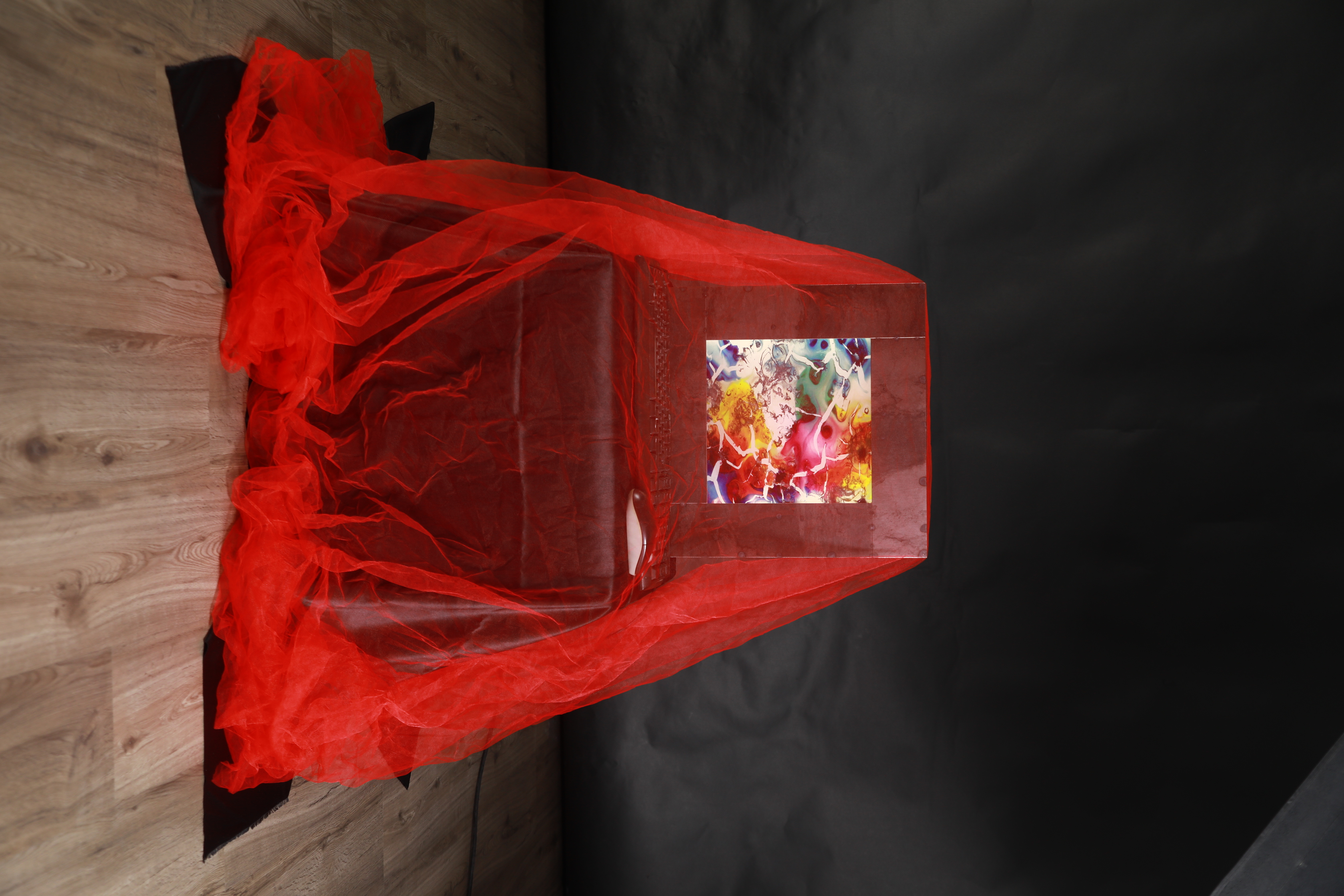
The installation features a computer enclosed in a luminous metal box and wrapped in a transparent red veil. An everyday, functional object is thus removed from its ordinary use and transformed into an almost ritualistic presence. The screen becomes the visual fulcrum of the work: a light source that attracts the gaze and focuses attention, like a contemporary altar dedicated to the incessant production of images and information.
The red veil introduces a dynamic of revelation and concealment. It does not completely hide the device, but alters its perception, filtering the viewer's gaze. This veiling gesture recalls ritual and museum practices, in which the object is separated from its everyday context to acquire a symbolic status. At the same time, the transparency of the fabric suggests the contemporary condition in which our experience of the world is constantly mediated by technological surfaces and digital interfaces.
The color red amplifies this symbolic tension: it evokes desire, seduction, vulnerability, and, at the same time, alertness. The fabric appears as a sensitive membrane enveloping the machine, creating a contrast between the cold materiality of the technological device and an almost organic, corporeal dimension.
The abstract, luminous image emerging from the monitor suggests the continuous flow of data, images, and information that permeates contemporary digital culture. The computer no longer appears merely as a technical tool, but as a hub of visual and cognitive production, an object that concentrates imagination, attention, and collective dependence.
Through this gesture, the work stages a sort of secular ritual of contemporaneity. The machine is veiled as a relic or a powerful object, inviting the viewer to question the role that screens and digital devices have assumed in constructing our perceptual, cultural, and emotional experience of the world.
The installation features a computer enclosed in a luminous metal box and wrapped in a transparent red veil. An everyday, functional object is thus removed from its ordinary use and transformed into an almost ritualistic presence. The screen becomes the visual fulcrum of the work: a light source that attracts the gaze and focuses attention, like a contemporary altar dedicated to the incessant production of images and information.
The red veil introduces a dynamic of revelation and concealment. It does not completely hide the device, but alters its perception, filtering the viewer's gaze. This veiling gesture recalls ritual and museum practices, in which the object is separated from its everyday context to acquire a symbolic status. At the same time, the transparency of the fabric suggests the contemporary condition in which our experience of the world is constantly mediated by technological surfaces and digital interfaces.
The color red amplifies this symbolic tension: it evokes desire, seduction, vulnerability, and, at the same time, alertness. The fabric appears as a sensitive membrane enveloping the machine, creating a contrast between the cold materiality of the technological device and an almost organic, corporeal dimension.
The abstract, luminous image emerging from the monitor suggests the continuous flow of data, images, and information that permeates contemporary digital culture. The computer no longer appears merely as a technical tool, but as a hub of visual and cognitive production, an object that concentrates imagination, attention, and collective dependence.
Through this gesture, the work stages a sort of secular ritual of contemporaneity. The machine is veiled as a relic or a powerful object, inviting the viewer to question the role that screens and digital devices have assumed in constructing our perceptual, cultural, and emotional experience of the world.