

work
Poulets Joyeux
| category | Installation |
| subject | Political / Social, Nature, Animal |
| tags | |
| base | 400 cm |
| height | 180 cm |
| depth | 0 cm |
| year | 2023 |
Ink and watercolor on linen paper
21 × 29.7 cm (each)
Series of 104
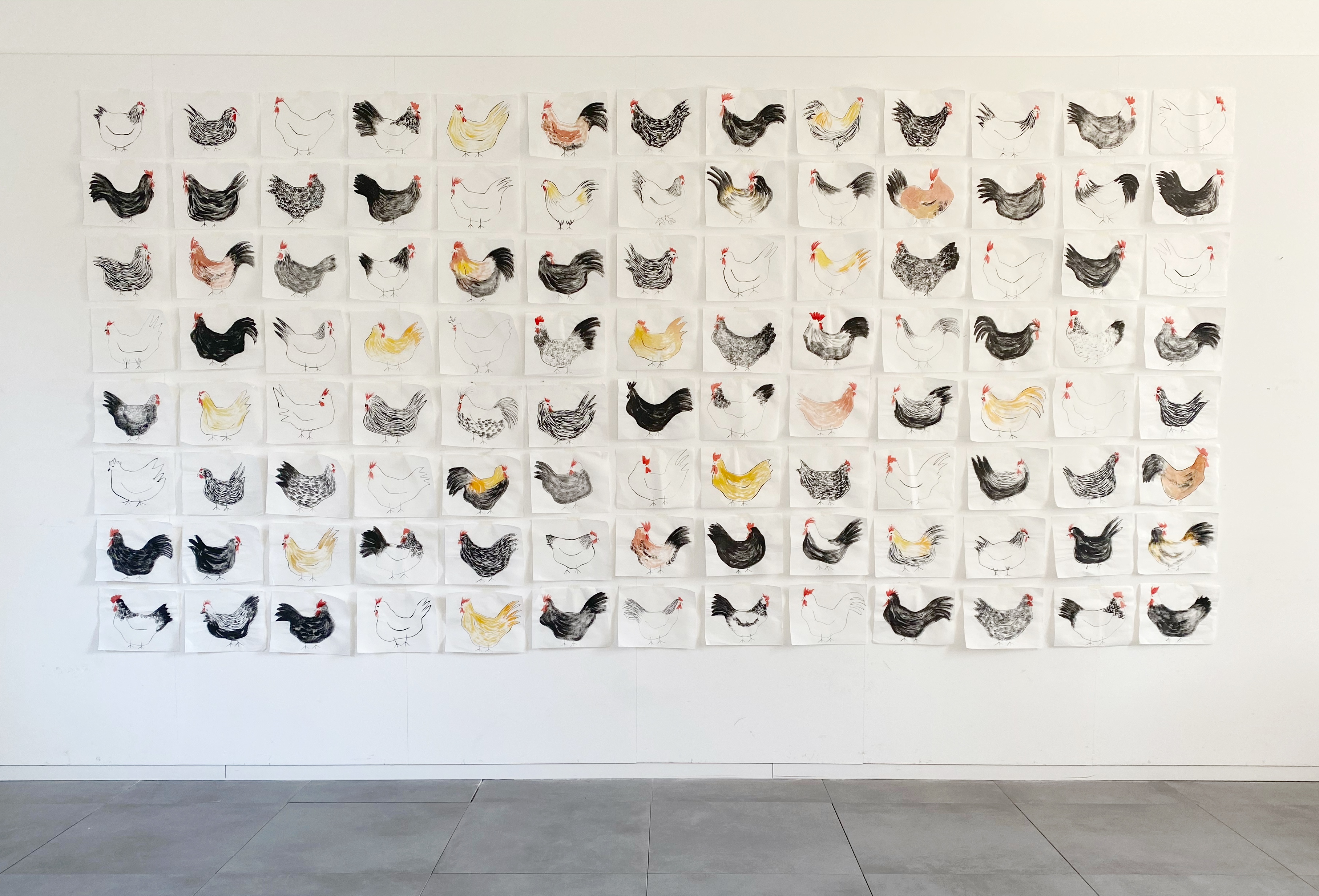
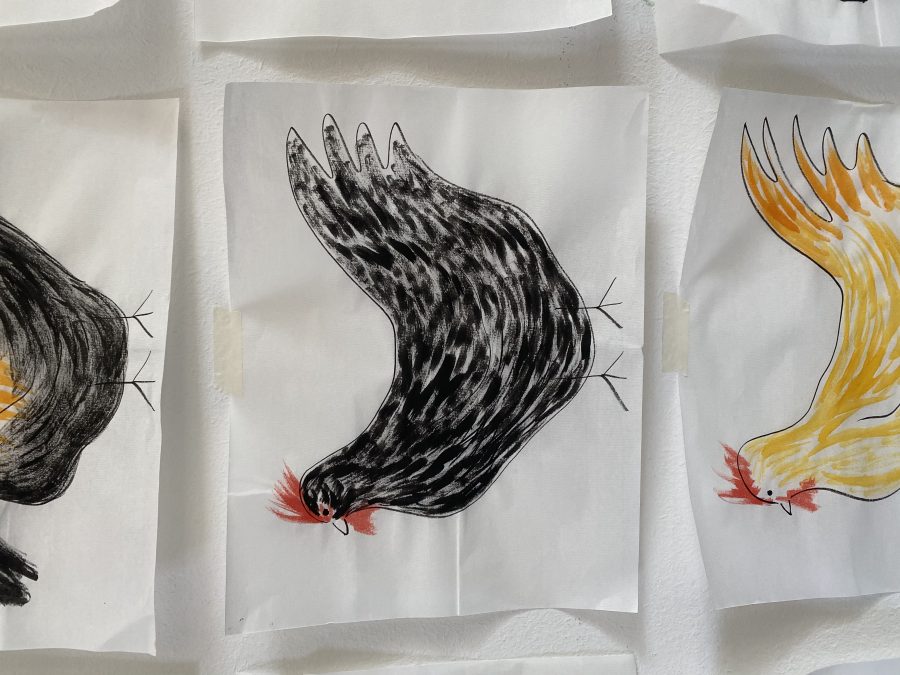
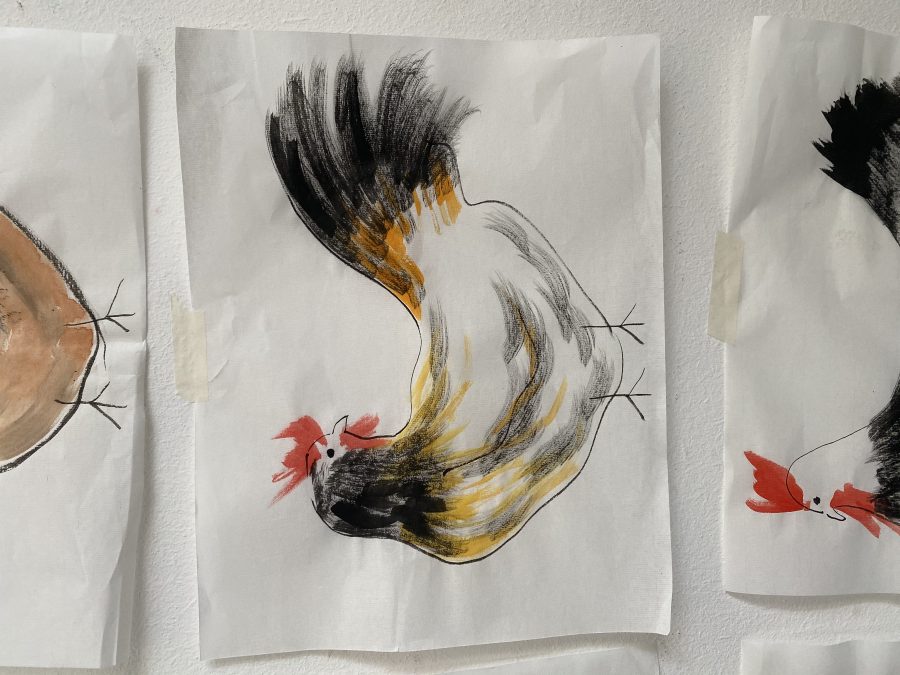
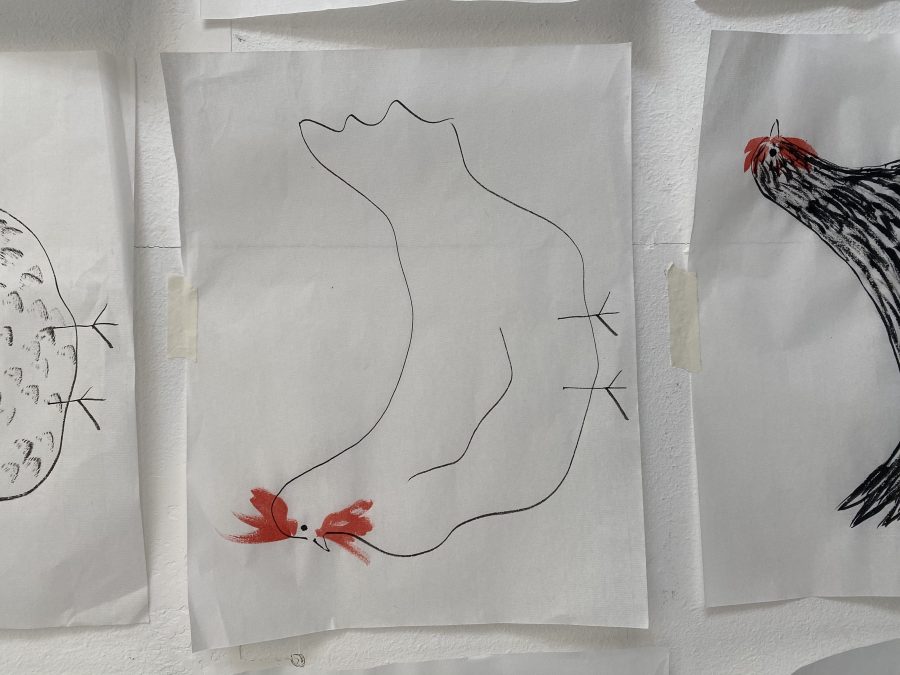
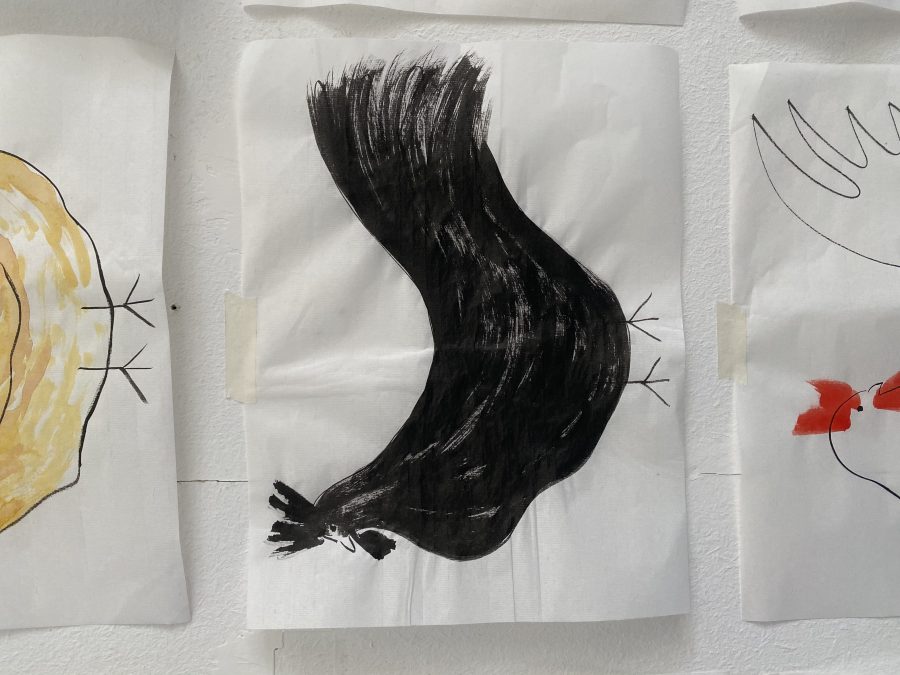
An intensive farm appears as a wall of silent gazes and similar bodies, yet never truly identical. The figures are traced one after another through a rapid yet focused gesture, evoking the logic of the assembly line and the automatism of repetitive labor. Each chicken retains a subtle individuality: a variation in color, a trembling line, a more pronounced brushstroke.
Arranged in a tight grid, one per sheet, the bodies form a closed system, evoking dynamics of standardization and control. A direct reference is Eating Animals by Jonathan Safran Foer, where a spread shows a simple rectangle—the minimal space allocated to each animal in intensive farming.
Despite this, a vital tension persists among the drawn bodies. The act of drawing itself, in its attempt to introduce variation within repetition, becomes a possible form of resistance and liberation.
21 × 29.7 cm (each)
Series of 104
An intensive farm appears as a wall of silent gazes and similar bodies, yet never truly identical. The figures are traced one after another through a rapid yet focused gesture, evoking the logic of the assembly line and the automatism of repetitive labor. Each chicken retains a subtle individuality: a variation in color, a trembling line, a more pronounced brushstroke.
Arranged in a tight grid, one per sheet, the bodies form a closed system, evoking dynamics of standardization and control. A direct reference is Eating Animals by Jonathan Safran Foer, where a spread shows a simple rectangle—the minimal space allocated to each animal in intensive farming.
Despite this, a vital tension persists among the drawn bodies. The act of drawing itself, in its attempt to introduce variation within repetition, becomes a possible form of resistance and liberation.