
work
Vettori dell’io additato
| category | Sculpture |
| subject | Abstract |
| tags | #line, #time |
| base | 30 cm |
| height | 100 cm |
| depth | 30 cm |
| year | 2025 |
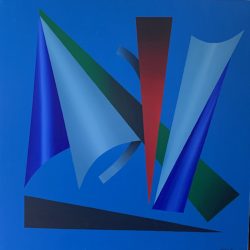
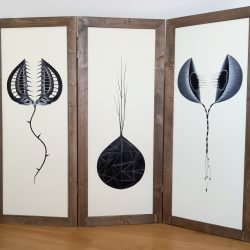
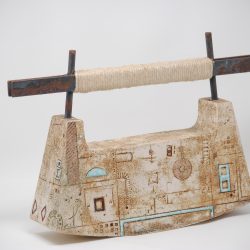
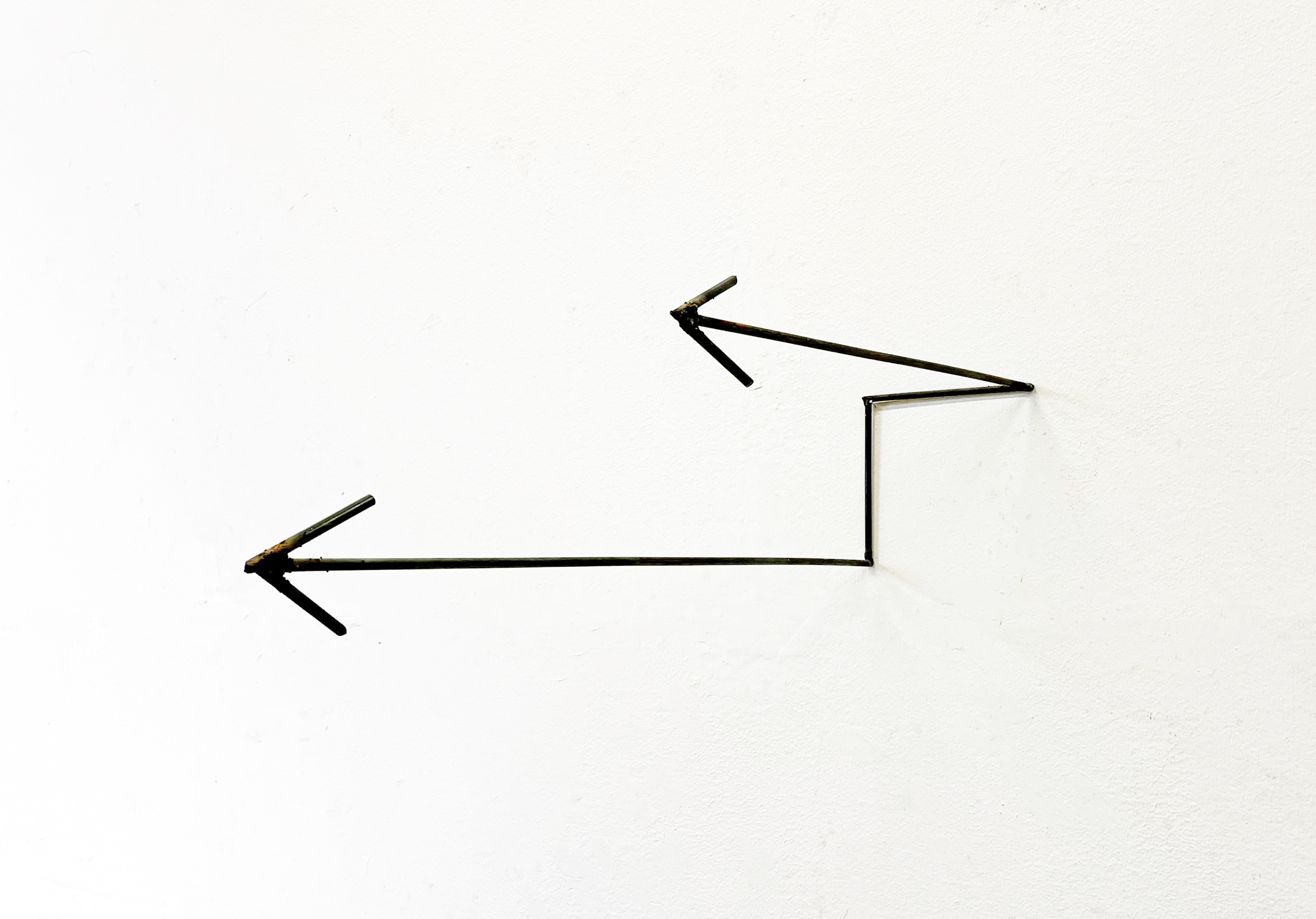
They are not directions, but insistences.
Arrows that pile up, that press, that advance until they become extremely close, almost touching the gaze, violating its threshold.
We live immersed in a system that continually indicates: accelerate, produce, choose, consume.
An incessant flow of vectors that orient the body even before thought.
But here the movement cracks.
The arrows do not lead out: they converge. They turn back.
They do not open a space, they compress it.
It is in this pressure that something reverses.
The urgency becomes a question.
Where am I going, if every direction has already been assigned to me?
And above all: what does it really mean to dedicate time?
Time is not given. It is an act.
A gesture of subtraction, even before it is a choice.
In a present that consumes, the work suggests a minimal yet radical possibility:
not to follow the direction, but to inhabit its friction.
Because perhaps the only movement that remains is the one that passes through the outside and settles within.
And from there, slowly, it redraws meaning.
Arrows that pile up, that press, that advance until they become extremely close, almost touching the gaze, violating its threshold.
We live immersed in a system that continually indicates: accelerate, produce, choose, consume.
An incessant flow of vectors that orient the body even before thought.
But here the movement cracks.
The arrows do not lead out: they converge. They turn back.
They do not open a space, they compress it.
It is in this pressure that something reverses.
The urgency becomes a question.
Where am I going, if every direction has already been assigned to me?
And above all: what does it really mean to dedicate time?
Time is not given. It is an act.
A gesture of subtraction, even before it is a choice.
In a present that consumes, the work suggests a minimal yet radical possibility:
not to follow the direction, but to inhabit its friction.
Because perhaps the only movement that remains is the one that passes through the outside and settles within.
And from there, slowly, it redraws meaning.