

work
Lascia gli occhi
| category | Installation |
| subject | Nature |
| tags | |
| base | 150 cm |
| height | 250 cm |
| depth | 150 cm |
| year | 2025 |
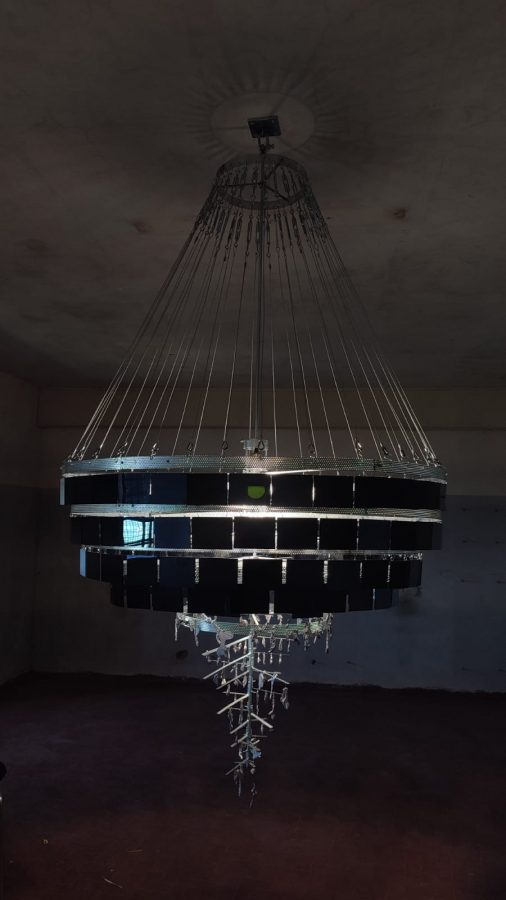
The artwork was conceived as a site-specific installation
for the upper floors—formerly the prison—of Castello
Orsini in Soriano nel Cimino. The project reflects on
the dual meaning of the Italian word accecamento (blinding). It refers both to the permanent or temporary deprivation of sight and to a botanical practice involving
the cutting and pruning of young buds—called “eyes”—
from various trees or fruit-bearing plants.
The work unfolds in two conceptual phases. The first involves the collection, selection, and casting in lead of cut buds
taken from beech and hazelnut trees native to the area.
The second phase shifts attention to the coercive spaces of
the former prison, contemplating the human and spatial
condition of restricted autonomy and the denial of light.
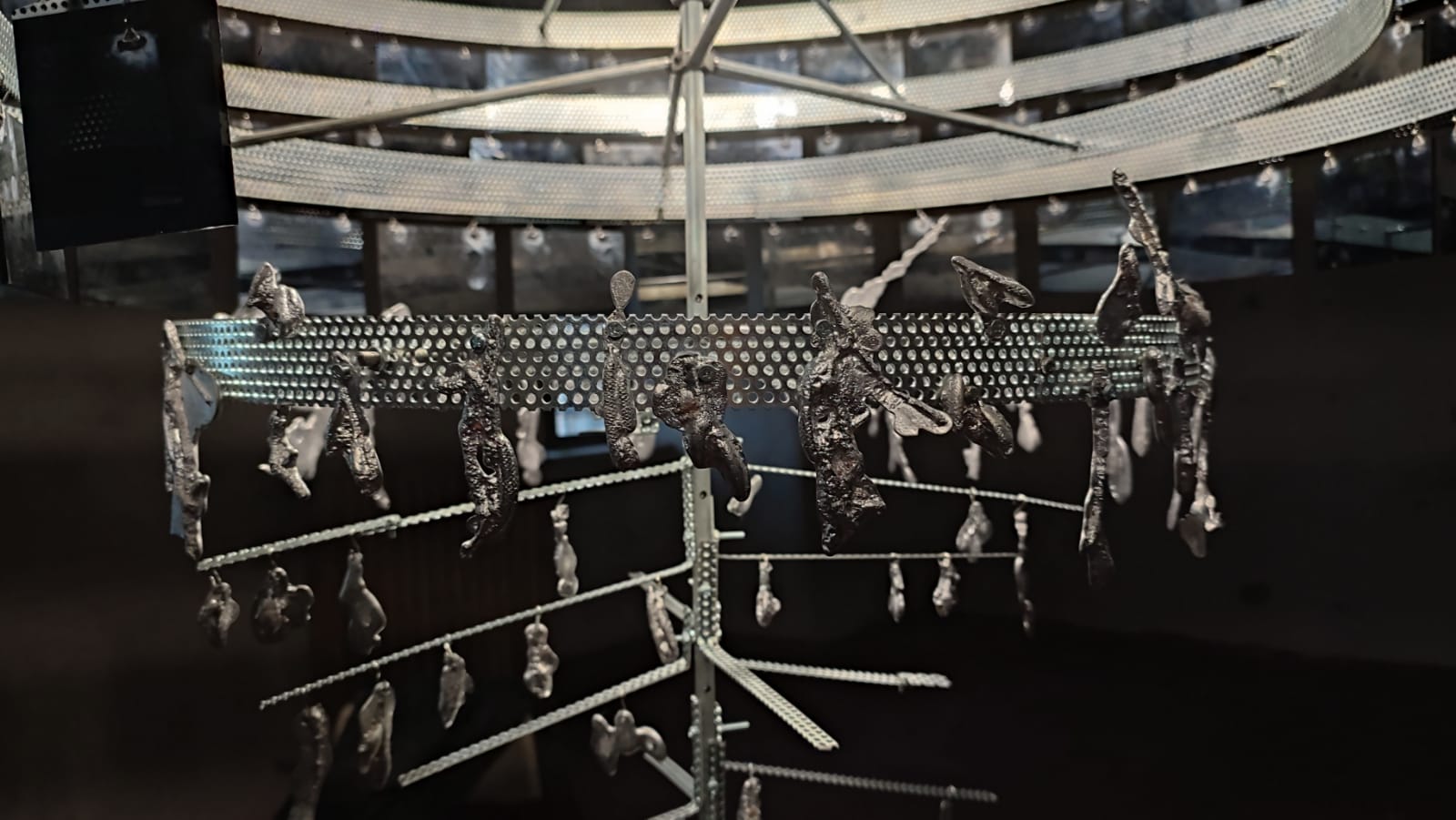
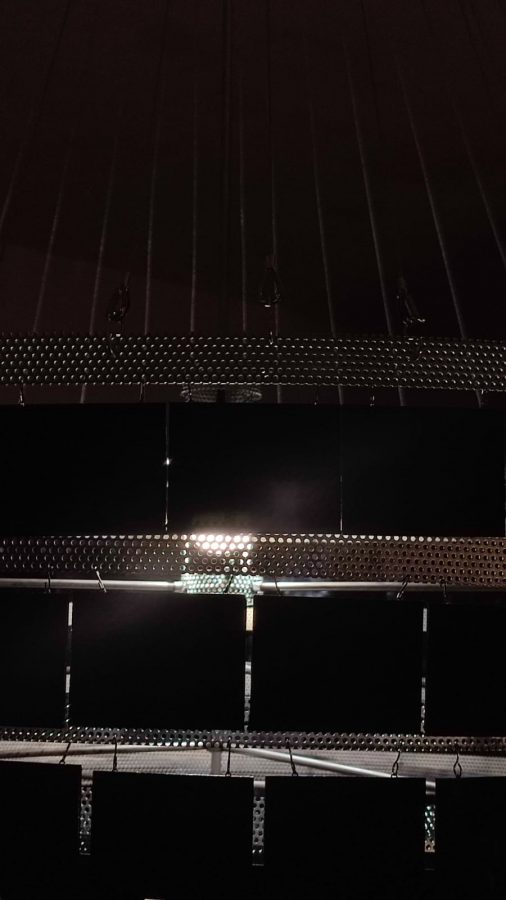
Formally, the installation echoes the structure of antique
Napoleonic-style chandeliers. However, it is constructed
from unconventional materials: countless steel cables,
small plates of actinic glass, and lead forms that resemble the original buds—cut and cast, now withheld from
the light.
for the upper floors—formerly the prison—of Castello
Orsini in Soriano nel Cimino. The project reflects on
the dual meaning of the Italian word accecamento (blinding). It refers both to the permanent or temporary deprivation of sight and to a botanical practice involving
the cutting and pruning of young buds—called “eyes”—
from various trees or fruit-bearing plants.
The work unfolds in two conceptual phases. The first involves the collection, selection, and casting in lead of cut buds
taken from beech and hazelnut trees native to the area.
The second phase shifts attention to the coercive spaces of
the former prison, contemplating the human and spatial
condition of restricted autonomy and the denial of light.
Formally, the installation echoes the structure of antique
Napoleonic-style chandeliers. However, it is constructed
from unconventional materials: countless steel cables,
small plates of actinic glass, and lead forms that resemble the original buds—cut and cast, now withheld from
the light.