
work
Inplosion box
| category | Installation |
| subject | Nature |
| tags | memoria, viaggio, ambiente, luce, plastica, inquinamento, scarti, alimenti, terra, pianeta, organico, inorganico, assenza , essenza |
| base | 50 cm |
| height | 50 cm |
| depth | 8 cm |
| year | 2020 |
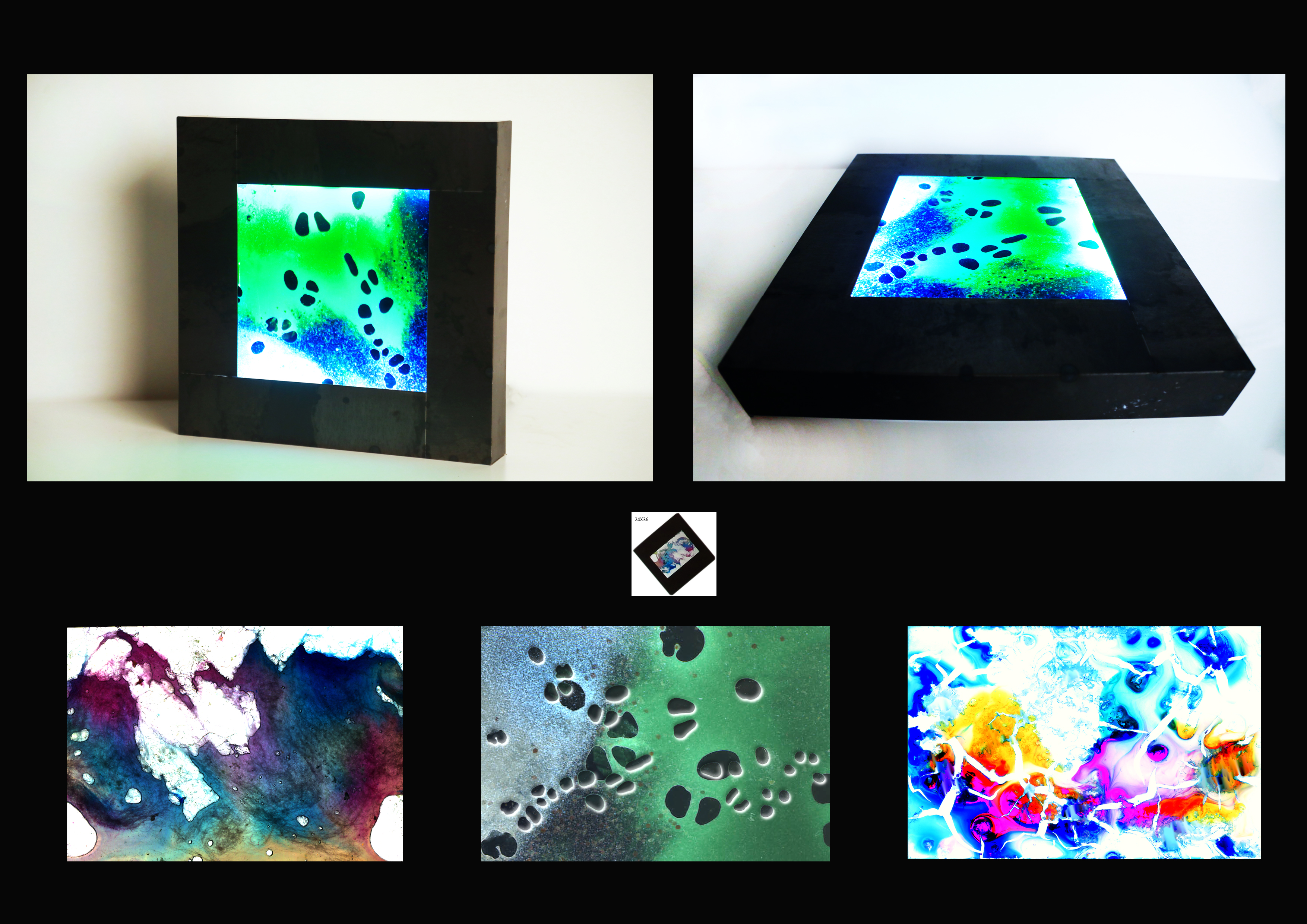
Mixed media: metal modules with printed, backlit glass plates.
This modular light installation is composed of three metal boxes containing backlit glass plates, onto which plotter-generated images are printed. The work explores the profound connection between humans, nature, and waste—understood both as waste generated by natural processes and as an artificial product of human activity.
The theme of waste is addressed through a transformation process that reverses our perception: the waste, initially selected and separated, is subsequently mixed, treated, enlarged, and analyzed until its hidden essence is revealed. This practice, suspended between alchemy and desecration, leads to the creation of organic and inorganic micro-fragments fixed on small acetate rectangles and mounted in 24x36 mm slide frames. The fragments are then enhanced with natural dyes and glues.
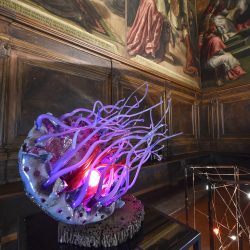
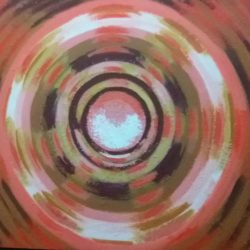
Backlit, these compositions are photographed and digitized without any alteration using artificial intelligence: light takes on a central role, becoming a tool of revelation. Visual microcosms emerge, like reversible films, displaying particles interacting with the light, generating unexpected shapes and surprising chromatic variations. The resulting images are then printed on glass and inserted into the metal modules that compose the installation.
The work restores visibility to materials commonly considered waste—such as microplastics and food residues—often eliminated in the early stages of the production cycle. Through their artistic transfiguration, the aim is to symbolically interrupt the chain of waste and dispersion, redefining the very meaning of waste and suggesting the possibility of regeneration.
The installation also invites reflection on the global relationship with food: on the one hand, excess, compulsive consumption, and waste in industrialized countries; on the other, the hunger and scarcity that afflict many areas of the world, marked by war and famine. Food thus becomes not only nourishment, but a gesture of care and responsibility towards oneself, others, and the planet.
The light that passes through the work symbolizes a rebirth: a new life ignited in a suspended, dreamlike universe, evoking the Earth itself. However, this luminous world is enclosed in a metal structure that recalls the concrete reality of our waste. We produce and, at the same time, destroy. There is no escape except to activate a new awareness within ourselves: a small universe of light capable of generating change.
This modular light installation is composed of three metal boxes containing backlit glass plates, onto which plotter-generated images are printed. The work explores the profound connection between humans, nature, and waste—understood both as waste generated by natural processes and as an artificial product of human activity.
The theme of waste is addressed through a transformation process that reverses our perception: the waste, initially selected and separated, is subsequently mixed, treated, enlarged, and analyzed until its hidden essence is revealed. This practice, suspended between alchemy and desecration, leads to the creation of organic and inorganic micro-fragments fixed on small acetate rectangles and mounted in 24x36 mm slide frames. The fragments are then enhanced with natural dyes and glues.
Backlit, these compositions are photographed and digitized without any alteration using artificial intelligence: light takes on a central role, becoming a tool of revelation. Visual microcosms emerge, like reversible films, displaying particles interacting with the light, generating unexpected shapes and surprising chromatic variations. The resulting images are then printed on glass and inserted into the metal modules that compose the installation.
The work restores visibility to materials commonly considered waste—such as microplastics and food residues—often eliminated in the early stages of the production cycle. Through their artistic transfiguration, the aim is to symbolically interrupt the chain of waste and dispersion, redefining the very meaning of waste and suggesting the possibility of regeneration.
The installation also invites reflection on the global relationship with food: on the one hand, excess, compulsive consumption, and waste in industrialized countries; on the other, the hunger and scarcity that afflict many areas of the world, marked by war and famine. Food thus becomes not only nourishment, but a gesture of care and responsibility towards oneself, others, and the planet.
The light that passes through the work symbolizes a rebirth: a new life ignited in a suspended, dreamlike universe, evoking the Earth itself. However, this luminous world is enclosed in a metal structure that recalls the concrete reality of our waste. We produce and, at the same time, destroy. There is no escape except to activate a new awareness within ourselves: a small universe of light capable of generating change.