

work
Woman: “la passerella delle ombre”
| category | Graphics |
| subject | Beauty, Human figure, Political / Social |
| tags | donne, discriminazione |
| base | 100 cm |
| height | 40 cm |
| depth | 0 cm |
| year | 2026 |
Title: Woman: "The Walkway of Shadows"
Material: Metal plate
Technique: Mixed media with transfer printing, unconventional etching, acrylic
Dimensions: 40 x 0.3 x 100 cm
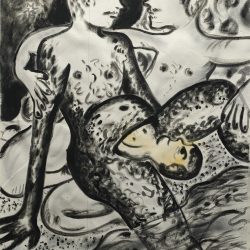
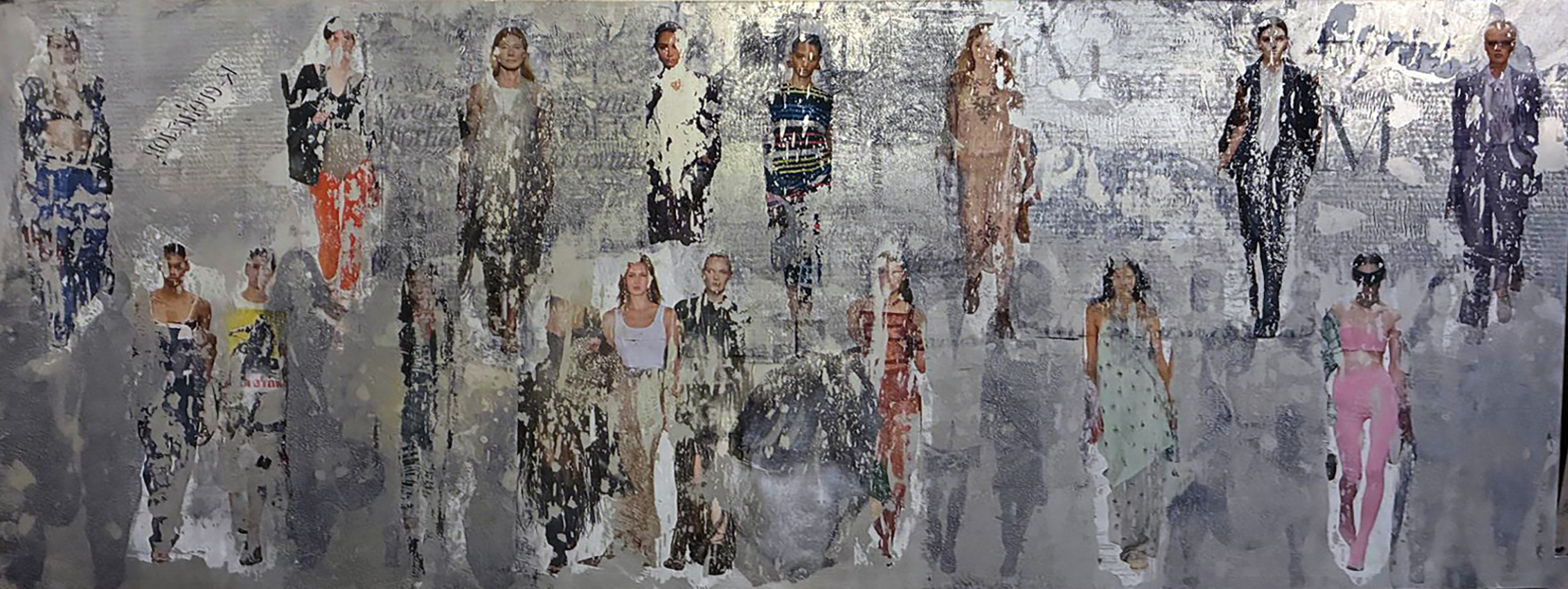
The work, created on a metal plate using unconventional etchings and printing techniques combined with image transfer, constructs a visual space where the female figure becomes the center of a social reflection on women's visibility, identity, and collective perception. The cold, reflective metal surface is not merely a technical support but also takes on a symbolic function: it evokes the idea of a social mirror, capable of simultaneously reflecting and distorting the image of reality.
The female figures, derived from transferred images, appear arranged in sequence as if on a catwalk or in a sort of visual archive of the contemporary female body. Their photographic origins suggest a relationship with the media, fashion, and the public representation of women, environments in which the female image is often constructed, replicated, and consumed. However, these figures are not presented in a clear or celebratory manner: the scratched surfaces, abrasions, and textured glazes interrupt the readability of the images, transforming them into partial, almost fragile presences.
A fundamental element of the composition are the reflected shadows, which emerge as indistinct silhouettes behind or beneath the depicted bodies. These shadows introduce a double level of interpretation: on the one hand, they allude to the multiplicity of female identities; on the other, they evoke the invisible presences, stories, and experiences that often remain hidden behind the public image. The shadow thus becomes a metaphor for what society does not see or does not want to see: the complexity of the female experience beyond the aesthetic surface.
The choice of unconventional printing and transfer helps reinforce this reflection. The image is neither stable nor definitive: it appears worn, layered, sometimes dissolved into the material. This process suggests how, in contemporary culture, female identity is continually constructed, manipulated, and reinterpreted.
Overall, the work establishes a dialogue between presence and absence, image and shadow, visibility and erasure. The women depicted seem to emerge and simultaneously dissolve into the metal surface, as if their identity were constantly mediated by the social gaze. The artist thus constructs a critical reflection on the way the female figure is observed, projected, and reflected in contemporary culture: not only as an image, but as a set of presences, memories, and shadows that inhabit social space.
Material: Metal plate
Technique: Mixed media with transfer printing, unconventional etching, acrylic
Dimensions: 40 x 0.3 x 100 cm
The work, created on a metal plate using unconventional etchings and printing techniques combined with image transfer, constructs a visual space where the female figure becomes the center of a social reflection on women's visibility, identity, and collective perception. The cold, reflective metal surface is not merely a technical support but also takes on a symbolic function: it evokes the idea of a social mirror, capable of simultaneously reflecting and distorting the image of reality.
The female figures, derived from transferred images, appear arranged in sequence as if on a catwalk or in a sort of visual archive of the contemporary female body. Their photographic origins suggest a relationship with the media, fashion, and the public representation of women, environments in which the female image is often constructed, replicated, and consumed. However, these figures are not presented in a clear or celebratory manner: the scratched surfaces, abrasions, and textured glazes interrupt the readability of the images, transforming them into partial, almost fragile presences.
A fundamental element of the composition are the reflected shadows, which emerge as indistinct silhouettes behind or beneath the depicted bodies. These shadows introduce a double level of interpretation: on the one hand, they allude to the multiplicity of female identities; on the other, they evoke the invisible presences, stories, and experiences that often remain hidden behind the public image. The shadow thus becomes a metaphor for what society does not see or does not want to see: the complexity of the female experience beyond the aesthetic surface.
The choice of unconventional printing and transfer helps reinforce this reflection. The image is neither stable nor definitive: it appears worn, layered, sometimes dissolved into the material. This process suggests how, in contemporary culture, female identity is continually constructed, manipulated, and reinterpreted.
Overall, the work establishes a dialogue between presence and absence, image and shadow, visibility and erasure. The women depicted seem to emerge and simultaneously dissolve into the metal surface, as if their identity were constantly mediated by the social gaze. The artist thus constructs a critical reflection on the way the female figure is observed, projected, and reflected in contemporary culture: not only as an image, but as a set of presences, memories, and shadows that inhabit social space.