

work
Guardarsi
| category | Installation |
| subject | Human figure |
| tags | loop, 360 gradi, installazione, autoritratto, video, Identità |
| base | 36 cm |
| height | 132 cm |
| depth | 37 cm |
| year | 2024 |
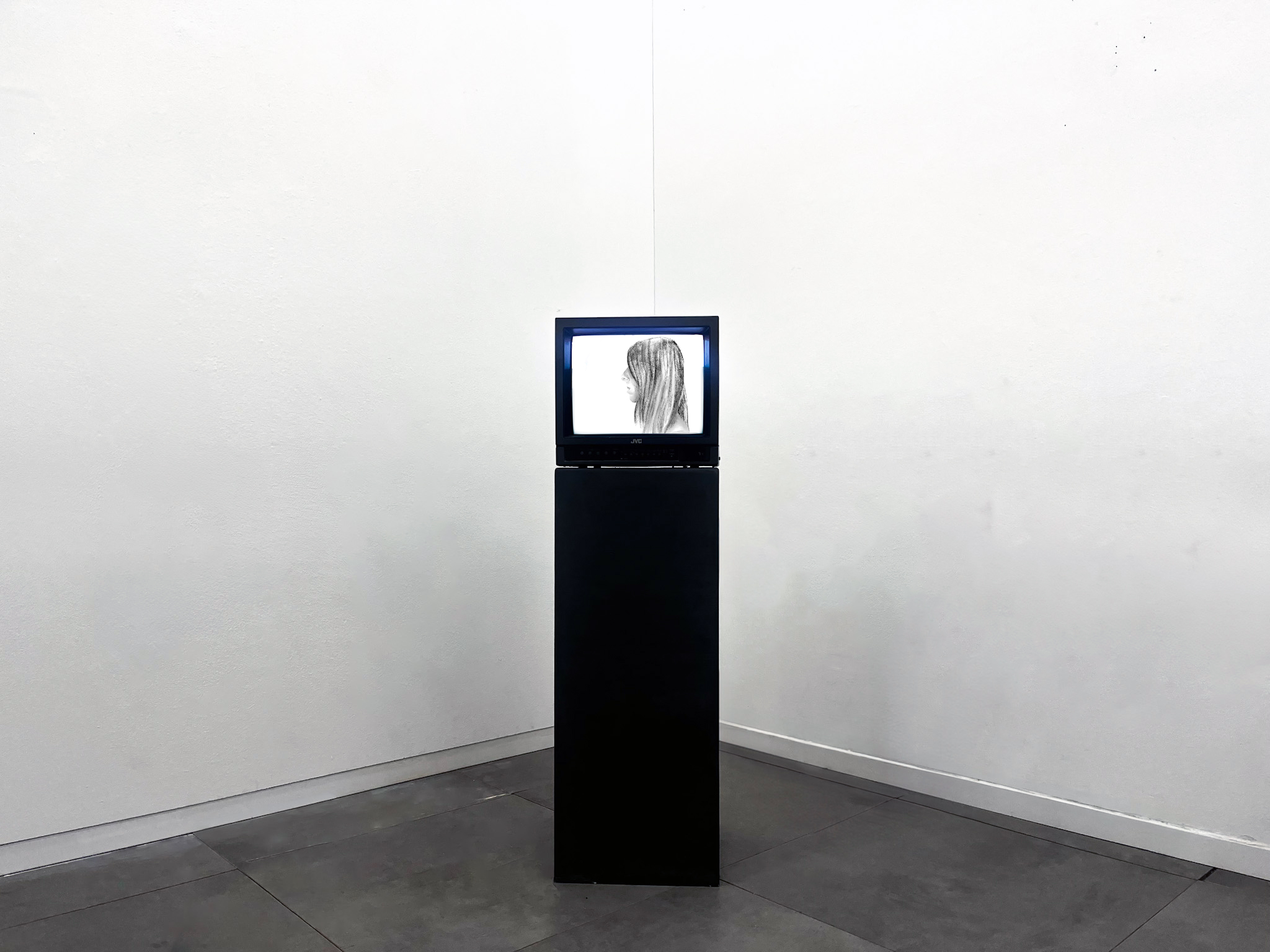
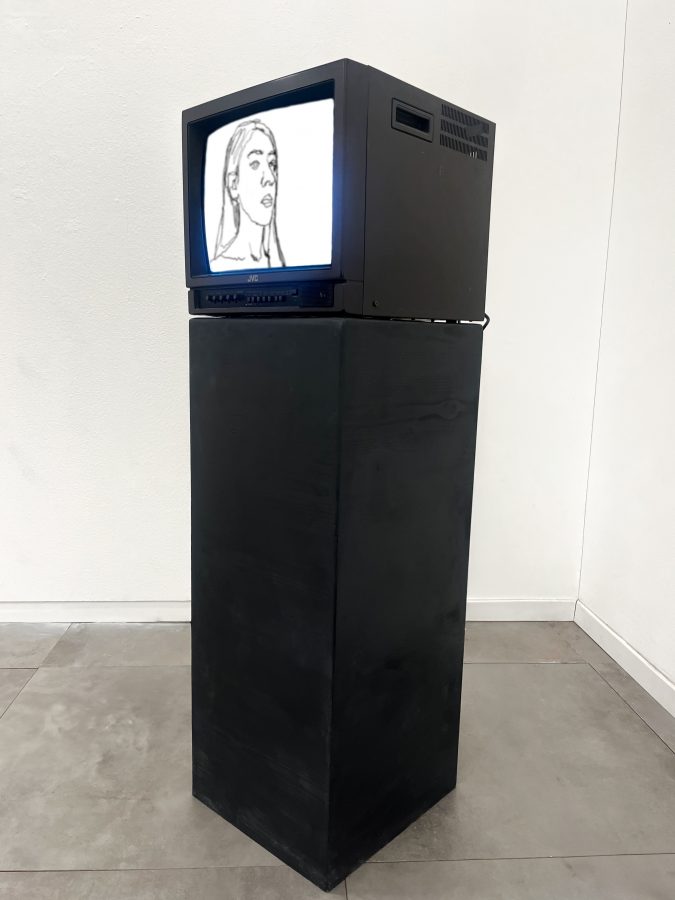
Video installation composed of a vintage CRT monitor displaying a black-and-white looped video, created from digital drawings (a sequence of self-portraits with continuous rotation and glitch effects), mounted on a solid wood plinth. Unique piece.
Guardarsi is a visual investigation of identity as a constantly shifting phenomenon. The perception of the self is subject to fragmentation, transformation, and adaptation, in a process of continuous redefinition. It is like looking at oneself in the mirror and, for a moment, feeling as if one is observing someone else: the image breaks apart, changes form, multiplies, never settling, just as we do in the attempt to understand ourselves.
The work explores this liminal state, in which self-observation becomes a means of redefining one’s existence. Guardarsi translates the experience of non-belonging into visual form, offering a narrative in which identity is always in transition. The CRT monitor and the wooden plinth give physical presence to this elusive condition, something tangible to hold onto as the video unfolds endlessly, without a true beginning or end.
Ultimately, to look at oneself is always, in part, to lose oneself and, in part, to find oneself again.
Guardarsi is a visual investigation of identity as a constantly shifting phenomenon. The perception of the self is subject to fragmentation, transformation, and adaptation, in a process of continuous redefinition. It is like looking at oneself in the mirror and, for a moment, feeling as if one is observing someone else: the image breaks apart, changes form, multiplies, never settling, just as we do in the attempt to understand ourselves.
The work explores this liminal state, in which self-observation becomes a means of redefining one’s existence. Guardarsi translates the experience of non-belonging into visual form, offering a narrative in which identity is always in transition. The CRT monitor and the wooden plinth give physical presence to this elusive condition, something tangible to hold onto as the video unfolds endlessly, without a true beginning or end.
Ultimately, to look at oneself is always, in part, to lose oneself and, in part, to find oneself again.