
Fabrice Bernasconi Borzì is the winner of the sixth edition of the exibart prize EP6.
Followed by Jacopo Dimastrogiovanni and Stefano Cescon.
Here is the list of the top 10 finalists
After several years of consistently remaining in the top 10 positions of the prize, Borzì claims the highest step of the podium.
With this victory, the award promoted by exibart confirms the value of an artistic journey as an essential element of evaluation.
1. Fabrice Bernasconi Borzì
2. Jacopo Dimastrogiovanni
3. Stefano Cescon
4. Luciano Sozio
5. Giuseppe Marinelli
6. Paola Cenati
7. Rafa
8. Plurale
9. Xinhan Yú
10. Samuel Di Blasi

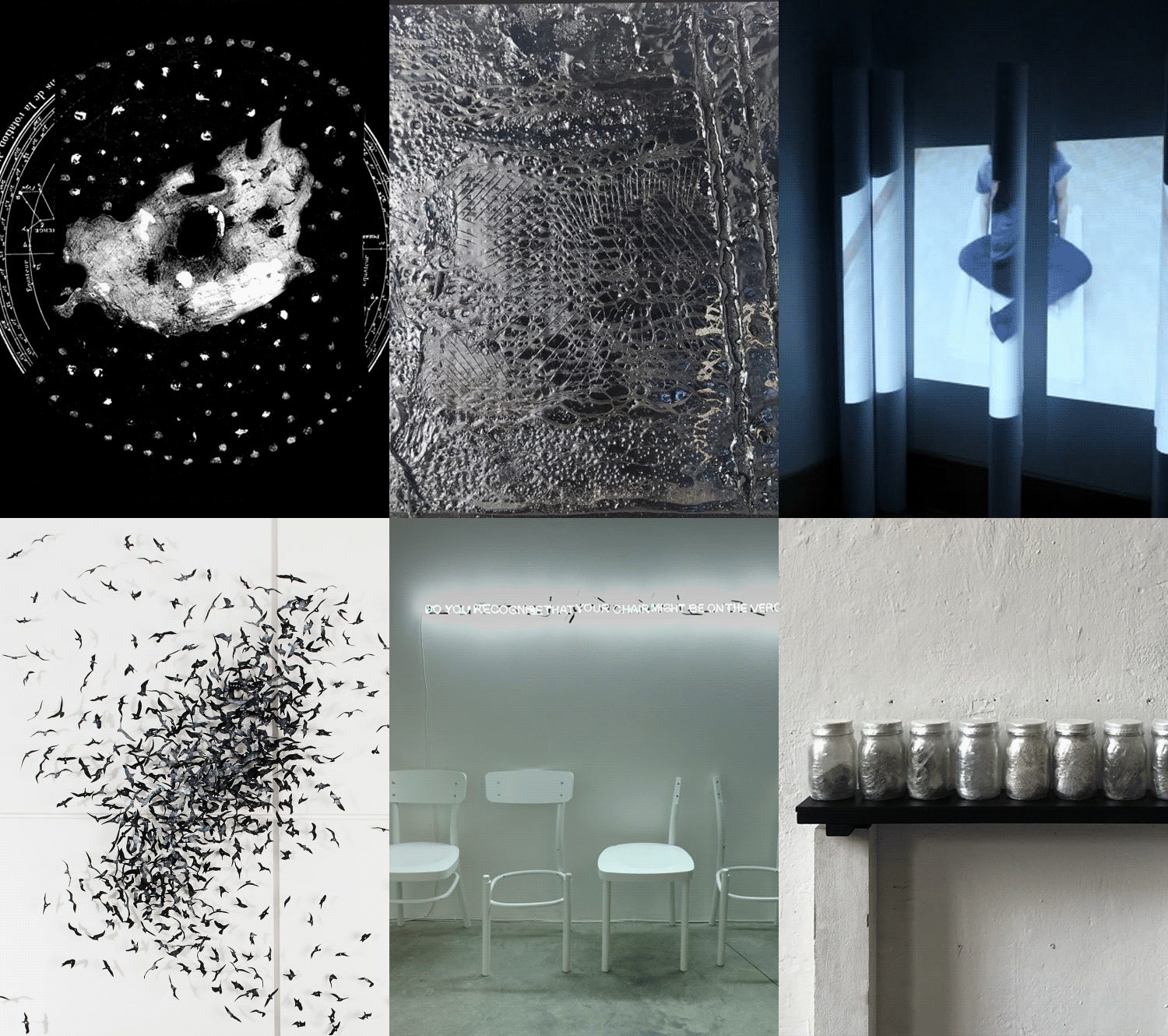
Fabrice Bernasconi Borzì
Fabrice Bernasconi Borzì is an Italian-Swiss artist, born in Geneva in 1989. Since 2018, he lives and works between Catania and Rome.
For the artist, this relocation represents a sort of reverse journey compared to the one taken by many of his peers: in moving from Northern to Southern Europe, he attempts to rediscover a cultural alterity peculiar to places of origin, functional to his artistic practice. This national and existential dualism, this double citizenship, with its inherent contradiction, lies at the foundation of the balanced conflict between forces that his work aims to express.
The formal elements he employs are most often simple, minimal, or depotentiated, as if to subvert the ‘accustomed’ through the use of a paradoxical and at times provocative language of Dadaist origin, which does not shy away from citationism and recycling. The intent is clear, as it develops a series of questions on the very meaning of ‘making’, on its implicit conceptual assumptions, as well as on how all this is interpreted within the current art system. From these premises stems a reflection on human beings and their alienation from existence, in a dichotomy that politically inherits the tradition of conflict between productive and social forces, against hegemonic and capitalist powers.
His appears to be a kind of philosophy of idiocy, whose linguistic structure—often precarious forms and extemporaneous assemblages—is the result of an oxymoronic ‘discipline of the provisional’ that at times recalls a certain intellectual intent of Situationist détournement viewed from the processual perspective of a rigorous and methodical behaviorism. A contradiction in terms that leads him to work, with stubborn discipline, on complex concepts such as loss, precariousness, and resilience, hidden under the expressive device of a poorly concealed irony. Under these conditions, nihilism and history, defeatism and teleology become one, bringing into being an active and catalyzing form of resistance. This is a conjunction of philosophy and revolt, of belief, subversion, and belonging. Politics and poetry in the raw gesture of keeping one’s balance despite the evidence of facts.
Fabrice Bernasconi Borzì considers himself a “sponge and a thief of ideas, but one who works hard to truly be who he is.”

Jacopo Dimastrogiovanni
Through painting, I intend to develop a reflection on Man, in order to investigate the causes and effects of the anxieties that characterize and trouble his very nature.
I have collaborated with galleries in Italy and abroad, including Mondoromulo Arte Contemporanea (Castelvenere – BN), Zaion Gallery (Biella), ISOLO17 (Verona), D.Gallery and CRAG (Turin), Galleria Pugliese Arte (Florence), Galleria Il Castello (Trento), Anywhere Art Company (Naples), and Molesworth Gallery (Dublin, Ireland).
Following my participation at the 54th Venice Biennale (Italian Pavilion, Turin), in 2013 I was invited to exhibit at MART – Museum of Modern and Contemporary Art of Trento and Rovereto, as part of the exhibition In risonanza. Istantanee di creatività nel cervello (In Resonance: Snapshots of Creativity in the Brain), curated by Francesca Bacci and Gabriele Lorenzoni. In 2015, I presented my work at the St James Cavalier Centre in Valletta (Malta) on the occasion of the project Afterselfie – beyond masks, curated by Carolina Bortolotti. In 2019, I won the Residency Award at the Artkeys Prize, through which I held a solo exhibition the following year at the Angioino – Aragonese Castle in Agropoli (SA). In 2022, I was selected among the finalists for the Arte Laguna Prize 21-22, exhibiting the following year at the Arsenale in Venice. In 2024 and 2025, I was selected among the finalists for the Exibart Prize.
Since 2014, I have been teaching painting and drawing in Trento, where I live and work.

Stefano Cescon
My artistic research has led me to reflect on the role of nature and time: from the symbolic material of this practice (a mixture of pure waxes) to the choice of natural pigments, earths, or minerals.
This aspect allows the entire body of work to be receptive and absorb the “seisms” coming from external conditions during execution, such as the place and environment in which I operate.
This meta-pictorial action then transforms into a personal reinterpretation of these suggestions, taking on the typical traits of a daily ritual—a deposition of thoughts overlapping in suspended time.
What I am interested in expressing is a delicate balance between poetics and material; the latter becomes the spokesperson for a history sedimented over time, like the pages of a great book containing both the orogeny of a mountain range and a pictorial memory that constitutes our identity.
The result is a painting composed of shades of color, an element that is inherently difficult to communicate by definition. As in music, when we try to define it, we run into the limits of our language, because color in nature is a transition—it is fundamentally comparable to time, as it does not act in the here and now.
This “flow” of my practice, like a rhythm suggested by the tides of the material, makes each work sequential to the next: thus revealing an organic narrative (both metaphorically and in fact) in which each piece ideally represents a cell of a broader, potentially infinite system.
The rules of difference and repetition inherent to nature are common to and at the core of my research: it is interesting to observe how a process based on these simple rules produces a complex “organism”, resulting from the variety of nuances caused by the replication of a pattern.
Each experience carries with it the fruits of the previous one, thus following an infinite scale.

Luciano Sozio
Luciano Sozio’s artistic practice is rooted in meticulous and precise planning. Indeed, each of his works originates from a research process starting with a careful study of materials and the processing of the pigments used. A calibrated and precise process through which the artist explores the sense of precariousness that accompanies all existence and the mystery surrounding it. The pictorial medium thus becomes a poetic language that carves out a space within the dimensions of his works, suspended between a reassuring silence and a haunting anticipation. Traces of our present emerge from his subjects, immersed in a mid-air pause charged with tension, freezing a moment where it seems something is about to happen: an event that, in the interlude of that instant, threatens to shatter the symmetry of phenomena. In each of his works, beauty takes breath, surfacing through the intrinsic fragility of everything that exists, suspended between the tangibility of matter and the evanescence of other dimensions.

Giuseppe Marinelli
Giuseppe Marinelli (Castellana Grotte, 1990) completed his studies in 2019 after attending the Painting course at the Academy of Fine Arts in Bari.
During his education, he focused his artistic research on traditional painting techniques, exploring themes that have engaged generations of artists for centuries, such as still life, the human figure, and landscape, paying particular attention to compositional elements.
In addition to painting, Giuseppe Marinelli has also worked with experimental languages using organic matter as a medium of expression.
He currently lives and works between Veneto, Trentino, and Apulia—regions that inspire his art by allowing him to stay in close contact with nature, which becomes the central theme of his works across various series.
The animal kingdom is of great importance to the artist, leading him to experiment through sculpture: starting from an animal skull, he completes its anatomy with hand-woven steel wire, like the continuous line of a pencil leaving its mark on paper.
Since 2013, he has taken part in numerous exhibition projects organized in public and private spaces across Bari, Rome, Turin, Venice, and abroad.
His first solo exhibition, titled “LA PELLE NOMADE DELLA PITTURA” (The Nomad Skin of Painting), was held in Bari in 2018 at the “VERNICE ARTE” gallery.
He exhibited at Paratissima 2023 with the exhibition “ECDISI – le infinite mute dell’animo” (Ecdysis – The Infinite Moltings of the Soul) at the Cavallerizza Reale in Turin, where he was awarded the CONTEMPORARY VISION PRIZE, which once again made him one of the protagonists of Turin Art Week in 2024, this time for the “TUNE IN” project inside the Palazzine di Corso Mortara.
In his latest solo exhibition titled “INTERSTIZI ENTROPICI” (Entropic Interstices), held at Palazzo Cozzolongo in Turi (BA), he investigates the concept of disorder, presenting chaotic compositions featuring various ink drawings and paintings.

Paola Cenati
Her practice reflects on the relationship with place and the objects that inhabit it. Found and collected elements possess specific intrinsic characteristics that become a source of research for her artistic journey. Paola’s work stems from the need to invert her perception of space in relation to the surrounding world, taking elements that inhabit the landscape and working on aspects both inherent and opposed to them. The direct connection to a place becomes capable of triggering an existential dimension and a process of transformation useful for an alternative and imaginative understanding of it through the use of sculptural installations. In Paola’s work, a return to traditional techniques leads to a deeper understanding of reality and the roots from which it originates. Her research focuses on discovering the invisible within the visible, shaping a gaze built through engagement with the landscape. The overall body of work serves as a reflection on space and the mental state translated into sculptural and installation art, often evoking qualities of abandonment.

Rafa
Rafael Triana’s practice investigates the symbolic and material construction of territory as a system shaped by processes of organization, control, and collective experience. Through installations and object-based works, the artist examines how spatial structures are internalized and reproduced, often before being consciously inhabited.
Working with everyday materials and modular forms, his research unfolds through strategies of accumulation, repetition, and dislocation, bringing forward the tension between order and instability. What appears fixed is instead revealed to be provisional, open to transformation.
Rather than a direct critique, his work proposes a reflective confrontation with the mechanisms that organize collective life, inviting a reconsideration of the structures that shape perception, movement, and the sense of belonging.

Plurale
plurale is a concept. Founded in 2020, it presents itself as an osmotic artistic collective whose core motivators are Leo Sophia (Verona, 1997) and Chiara Ventura (Verona, 1997). In 2022, it published the Manifesto Gesto empatico (Empathetic Gesture), a poetic declaration asserting its being-in-the-world, advocating empathetic action as the only viable mean today to restore equal rights and dignity to beings and things. Starting from the observation of sexuality and pleasure as political spaces, it creates imagery and rituals aimed at dismantling a heteronormative view of the body and decolonizing desire. It reflects on the aesthetic and linguistic codes tied to the youngest generations and specifically studies the Italian trap music phenomenon, analyzing current sociocultural issues. plurale manifests insights and moments of clarity through performative gestures, installations, video, music, and editorial projects in a daily practice of engagement with the world. plurale is co-author of the book SNITCH. Dentro la trap (Psicografici Editore, Rome) and has released three EPs: SINTETICO. Musica di plastica per il futuro che è già, KRÓNOS (co-produced with TAI – Tuscan Art Industry, Prato), and Gesto 7. It has exhibited, performed, and presented interventions at Museo Nazionale della Montagna “Duca degli Abruzzi” CAI (Turin), Tirana International Video Art Festival (Tirana), Galerie Utopia / 4lthangrund Cultural Center (Vienna), Mart – Museum of Modern and Contemporary Art of Trento and Rovereto (Rovereto), Viafarini (Milan), Galleria ME Vannucci (Pistoia), Adiacenze (Bologna), Roma Smistamento (Rome), and Teatro 1 – La Pelanda, Mattatoio (Rome), among others. Furthermore, it has collaborated with various non-artistic organizations such as the Centro Veneto di Psicoanalisi, the Comunità educativa Eldoardo&Esmeraldo in Verona, the First Reception Center (CPA) of the IPM in Bologna, and the Ernst Kirchweger-Haus (EKH) in Vienna.

Xinhan Yú
Xinhan Yú earned a Master’s degree in Visual Arts from the Academy of Fine Arts in Bologna in 2022. She currently lives and works in Bologna.
Yú works with video, installation, sculpture, and image-based media. Her practice investigates power structures and institutional violence, viewing violence not as an isolated event, but as an embedded systemic logic. Through technological, symbolic, and routine mechanisms, her works analyze how power shapes subjectivity, memory, and behavior. Rough textures, humor, and incisive expressive forms recur throughout her research, alongside images of childhood, public authorities, internet culture, and video game mechanics.
Her research originates from everyday visual forms through which systems of authority become familiar: uniforms, toys, police-related items, public symbols, game mechanics, spaces of childhood, family photos, and low-resolution digital materials. These forms often appear harmless, functional, or playful. In Yú’s work, however, they become unstable elements—carriers of discipline, memory, and control.
Rather than treating violence as a visible rupture, Yú considers it a condition that can be embedded in routine, language, entertainment, and the circulation of images. A toy can assume the role of a surveillance device. A game mechanic can transform into a model of obedience. A child’s body can reveal the earliest processes of authority training. A censored or politically charged image can re-emerge indirectly as form, color, object, or gesture.

Samuel Di Blasi
Samuel Di Blasi is an Italian artist born in Alba in 1975.
He trained at the School of Sculpture under Riccardo Cordero at the Academy of Fine Arts in Turin, and in 1999 in London, he refined his artistic language in the studio of Japanese sculptor Noriaki Maeda.
In 2015, he presented “Lo Scalatore di Nuvole” (The Cloud Climber), a solo exhibition at the Museo Nazionale della Montagna in Turin;
in 2016, he won the National Art Award “Ora”, and in 2018 he created “Sognando Sogni” (Dreaming Dreams), a solo exhibition at the ADD-Art Gallery in Spoleto.
In 2021 in Paris, Galerie Géraldine Banier exhibited several of his works inspired by the connection between man and nature during the exhibition “For a better world”.
In 2022 in Rome, at the Foro Italico, he presented the monumental work “Uomo Onda” (Wave Man) on the occasion of the 53rd European Aquatics Championships.
In 2023, Di Blasi created “La Nocciola” (The Hazelnut), a permanent steel sculpture located at the Pepè Belvedere in Grinzane Cavour.
That same year, he created “Marsabit”, a permanent cast aluminum sculpture placed in the Tablino Garden in Alba (Cn).
In 2024, he conceived and directed the art film “Uomo Onda by Samuel Di Blasi”, a finalist at the Golden Short Film Festival in Avezzano, the Emerging Lens Cultural Film Festival in Dartmouth, Canada, and the Serbest International Film Festival in Moldova.
On the exterior historical wall of the Municipality of Piscina (Torino), he unveiled the first of a new series of site-specific permanent works titled “Mitosi” (Mitosis), which in 2025 will also appear at the Tammerkosken lukio school in Tampere, Finland.
On November 26, 2024, in Alba, he unveiled his latest work titled “Porta di Luce” (Gate of Light), a permanent artistic aluminum casting extending over a linear length of 51 meters.
He lives and works between Alba, Pietrasanta, and Beijing.