
work
L’accesso al respiro
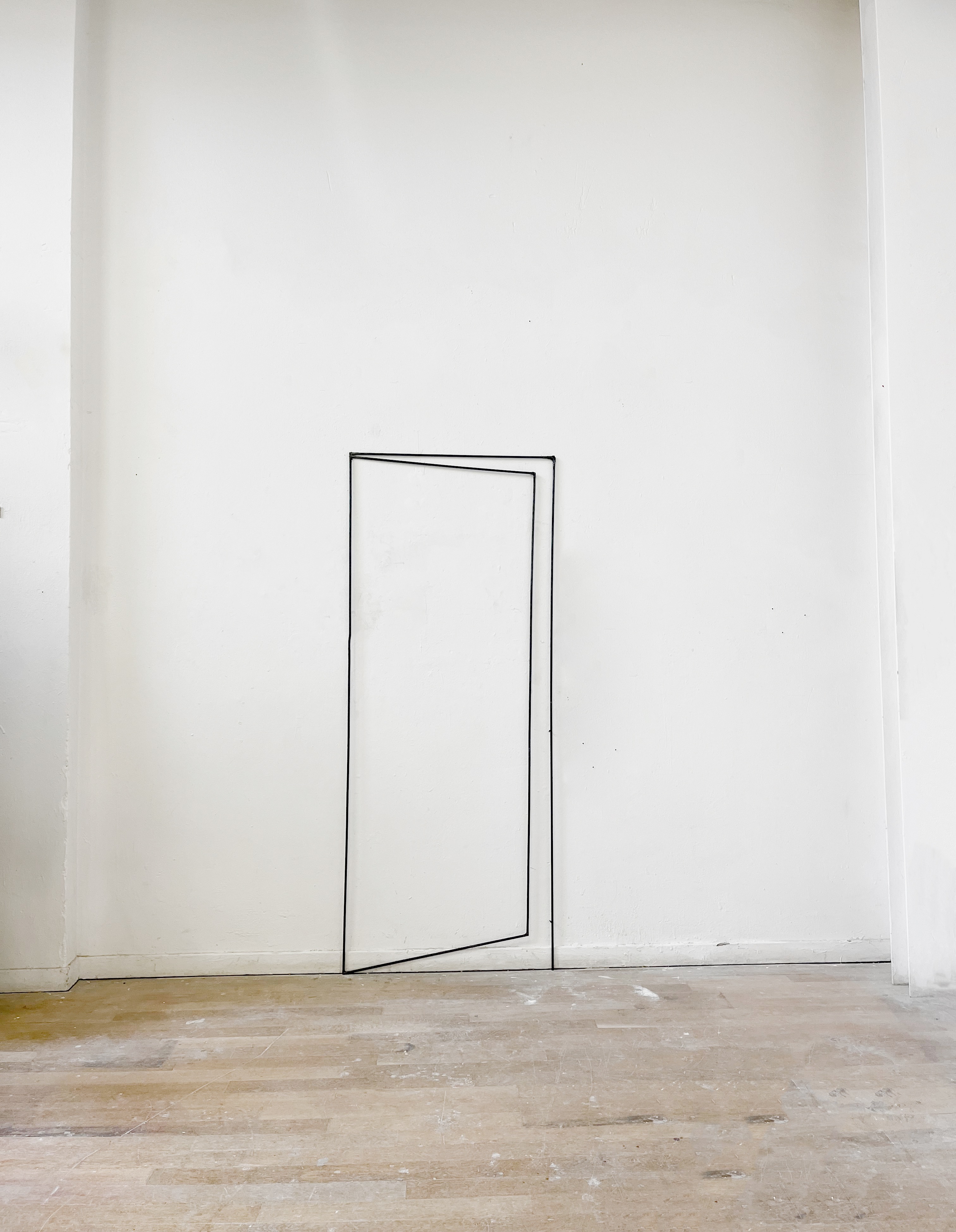
| category | Sculpture |
| subject | Architecture |
| tags | #breathe, #change, #minimal |
| base | 85 cm |
| height | 200 cm |
| depth | 0 cm |
| year | 2025 |
In a contemporary context characterized by an excess of stimuli and a constant requirement for action, the individual finds himself progressively deprived of his own capacity for direction.
Action precedes understanding, and the relationship with others is structured within a dynamic of reaction, rather than relation.
Conflict, in this scenario, is not overcome but absorbed: it settles within and from there reactivates, generating a reiteration that impedes any form of transformation.
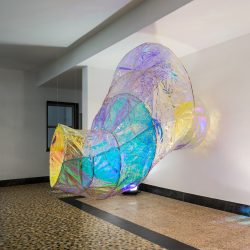
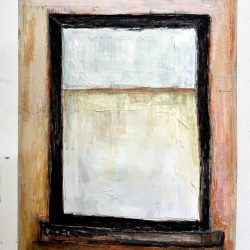
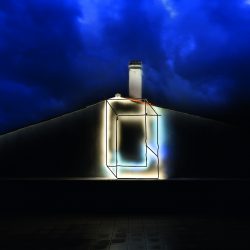
"Access to Breathing" presents itself as a hypothesis for interrupting this process.
Not as a solution, but as a condition of possibility.
It introduces a limit that does not separate, but suspends the automatic functioning of the perceptual and relational system.
It is in this suspension that a different mode of being becomes conceivable: a non-reactive time, an opening that is not immediately captured by the logic of production, response, or defense.
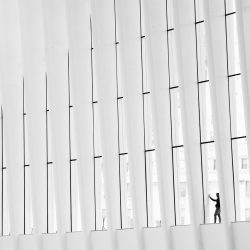
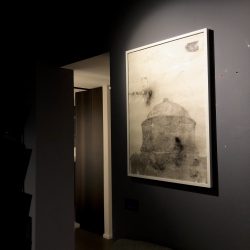
The threshold, in this sense, is not a device of passage but a field of redefinition.
It does not orient toward an elsewhere, but reconfigures the very way in which the subject can inhabit what is already given.
Breathing, then, is not an image but a critical practice.
It coincides with the possibility of escaping, even temporarily, from the continuity of the flow, reactivating a space in which change is not imposed, but made thinkable and therefore actionable.
From this perspective, the work does not represent a threshold: it establishes one.
Action precedes understanding, and the relationship with others is structured within a dynamic of reaction, rather than relation.
Conflict, in this scenario, is not overcome but absorbed: it settles within and from there reactivates, generating a reiteration that impedes any form of transformation.
"Access to Breathing" presents itself as a hypothesis for interrupting this process.
Not as a solution, but as a condition of possibility.
It introduces a limit that does not separate, but suspends the automatic functioning of the perceptual and relational system.
It is in this suspension that a different mode of being becomes conceivable: a non-reactive time, an opening that is not immediately captured by the logic of production, response, or defense.
The threshold, in this sense, is not a device of passage but a field of redefinition.
It does not orient toward an elsewhere, but reconfigures the very way in which the subject can inhabit what is already given.
Breathing, then, is not an image but a critical practice.
It coincides with the possibility of escaping, even temporarily, from the continuity of the flow, reactivating a space in which change is not imposed, but made thinkable and therefore actionable.
From this perspective, the work does not represent a threshold: it establishes one.